Interview: Stephen Bennett

Originally serving as Henry Fool’s keyboardist, Stephen Bennett soon became a key collaborator on Tim’s various solo albums, as well as serving as a member of the No-Man live band in 2008 and 2012.

How did you first hear about No-Man and how did you get involved with the making of Together We’re Stranger? 

I come from the North West of England like Tim and I’d heard one of his early bands on Radio Piccadilly in Manchester, while he knew me through my involvement with the NeoProg band LaHost and my music technology writing. I’d also bought some No-Man records, so I was familiar with their work, and I vaguely recall that Steven was around at the Marquee club in London when I spent a lot of time gigging and ligging there in the ‘80s. Tim played in Norwich with Samuel Smiles and a friend, Richard Fryer, mentioned he had actually moved to Norwich so he set up a meeting. Tim and I got on really well straight away as we have much in common, with similar backgrounds and artistic likes and influences. As for working with No-Man, Tim is incredibly generous — he’s always creating opportunities for his friends to shine, so it was inevitable I ended up working with them.

How did you make the noise that opens the title track of Together We’re Stranger?

I was living in Sweden at the time, so it probably involved either Moose mating calls or some experimental synthesizer I was reviewing. All I know is that it’s probably the most hated moment on any No-Man album. Perhaps, the most hated moment on any album ever released.

What was the impetus to start Henry Fool?

Richard Fryer proved to be a perceptive individual as he accurately predicted our shared interests and Tim and I quickly delved into passionate discussions about jazz and progressive rock. Surprisingly, we discovered that we had come close to crossing paths on several occasions at various music industry gatherings. We began entertaining some rather outlandish ideas for a ‘fantasy’ concept album based on the novel Stig of the Dump. However, our enthusiasm quickly waned when the author of said book, Clive King, happened to sit down at a nearby table. We took this unexpected encounter as a sign, but we departed with a determination to collaborate in some way. A few months later, Tim and I found ourselves at Paul Wright’s Music Farm studios in Norfolk as Tim and I insisted that a substantial portion of the album be recorded live as a band. Thus, Henry Fool was born, and our collaboration began. I hope we do make another Fool album as we do have a lot to say still in this jazz/prog format. Henry Fool was also my first collaboration with Steven who mixed a couple of tracks alongside my mixes.
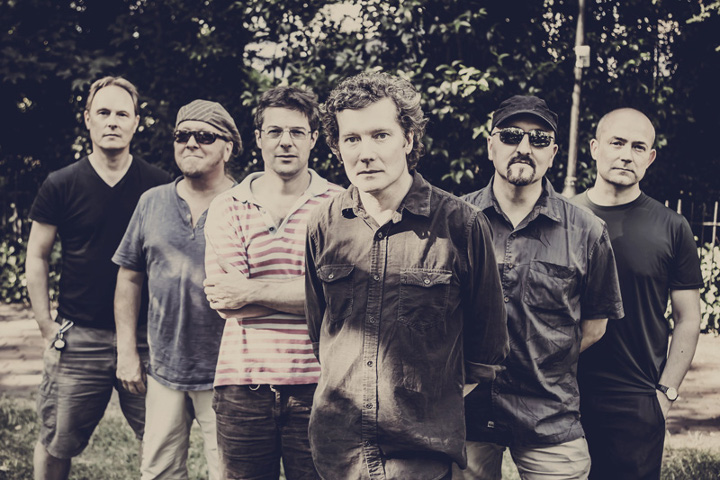
Stephen and Tim during their time as part of Henry Fool

How would you say Tim has evolved as a songwriter over the years of your collaboration?

I think he’s technically more confident now, which has allowed him to experiment more. Tim is a restless creator, always exploring new ways of making music and expressing himself. He chooses his collaborators well—I mean, look at some of the amazing people he’s worked with on his albums!

Tim has said that he was disappointed with his first solo album, My Hotel Year. Is that a sentiment that you share?

I never really liked the ‘cold’ and sparse sound of the mixes—but the songs and performances are great. David Picking, who mixed it and plays drums and other stuff, is an amazing musician and technologist and he did a fantastic job. I think the album is pretty unique sonically and musically. I tend to like the warm and overblown, so it was never going to sound right to me, but it’s still an amazing album. I thought the songs I co-wrote with Tim are pretty good, especially Sleepwalker and working with David Torn, Hugh Hopper, Peter Chilvers, the Enos and David was a brilliant experience.

What were the rehearsals like for the 2008 No-Man tour?

Imagine the most fun you’ve had and double it! Steven was away for the first few rehearsals, so the rest of us set up at a room in Cambridge—we sounded pretty good straight away I thought. Then Steven arrived with a pedal board the size of a bus! As soon as he hit a chord, it just took the music and performance to another level. I was using an early version of Apple’s Mainstage and planned to take that on tour with a Mac and a master keyboard—I like to travel light, though my studio is packed with vintage gear. All the way through rehearsals, my Mac kept crashing and Tim and Steven were starting to look nervous. I, of course, boasted that it’d be ‘alright on the night’, but the band were doubtful. As it turned out, my computer was probably the only thing that didn’t break on the tour. As for the tour itself, it was brilliant. The band were all similar in our tastes and lifestyles and most of us spent the time arguing about important stuff like which was the worst Mike Oldfield album or if any of the post-Duke Genesis albums were any good. Think Tim and Steven’s podcast, but with a whole band arguing instead. I just wish we’d recorded the last gig rather than the first for Love and Endings though, as we were, if you’ll pardon my French, shit hot by then.

How would you say the live band has evolved between the short 2008 tour and the longer 2012 tour? 

When you play together a lot, a kind of telepathy develops between the musicians. You can relax and take the music into new areas and take chances you might not at first. Working with brilliant musicians is one of the best experiences you can have, and Tim and Steven both really encourage you to push the envelope of your creativity.

No-Man in full fury during the 2012 tour

How would you say the arrangements of tracks differed from the studio to live performances when it comes to your role as keyboardist?

I’m a great believer in not just replicating the recordings live, though I know that fans often are disappointed by this. Inevitably, it was louder and rockier than the albums. I play less stuff live as well, as I want to have some fun on stage, not just be concentrating on pressing buttons or doing anything particularly technical. So, the arrangements tend to be sparser yet more powerful than any recordings.

Can you shed any light on the aborted 2012 No-Man album? How much of Abandoned Dancehall Dreams was originally supposed to be for that album? 

I’m not totally sure, but Steven was encouraging Tim to continue to develop his own oeuvre at that time. And Steven was really busy on his solo work, of course.

You and Tim haven’t co-written together since 2017’s Lost in the Ghost Light. Why did you two stop writing together, and might we see the two of you collaborate again in the future?

My son, Dexter, was born in that year so I took a hiatus from gigging and Tim’s moves to the west country meant we don’t meet up as much as we used to. And there was the pandemic of course! Tim and I also took the opportunity after four albums together to pursue different musical avenues and to work with other people. He did ask if wanted to do some work on Love you to Bits, but I decided that it really didn’t need my input—sometimes doing nothing is the best artistic choice. I’ve also been busy, working with members of White Willow, Airbag, Änglagård and Rain (Jacob Holm-Lupo and Ketil Vestrum Einarsen, Björn Riis and Mattias Olsson—with John Jowett (IQ, Arena, Tim’s band) and Myke Clifford from Henry Fool) in the Anglo/Scandinavian band Galasphere 347—our second album is due out in 2023—and I’m recording an album that might finally satiate my love of the ‘70s and ‘80s British Jazz scene, with Theo Travis on sax, Mattias on drums, John Jowett on bass, and the fantastic Nick Fletcher from the John Hackett band on guitar. I also get to write for a brass section, which I’ve been meaning to do most of my professional life! Tim and I speak on a regular basis and I’m sure we’ll work together again soon—I just need to get around to sending him some ideas!
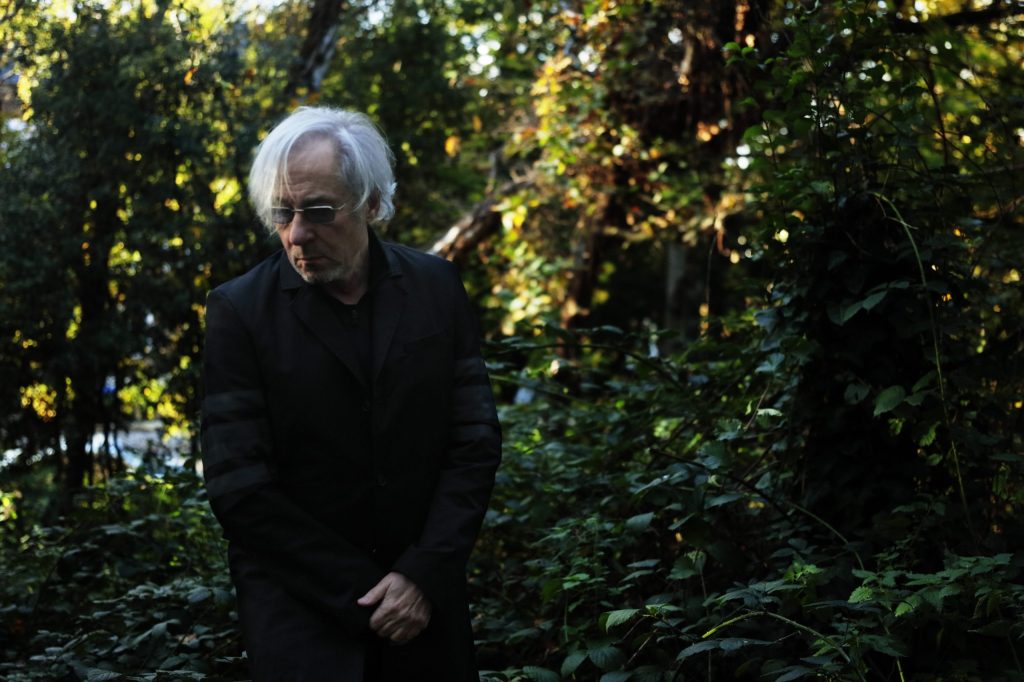
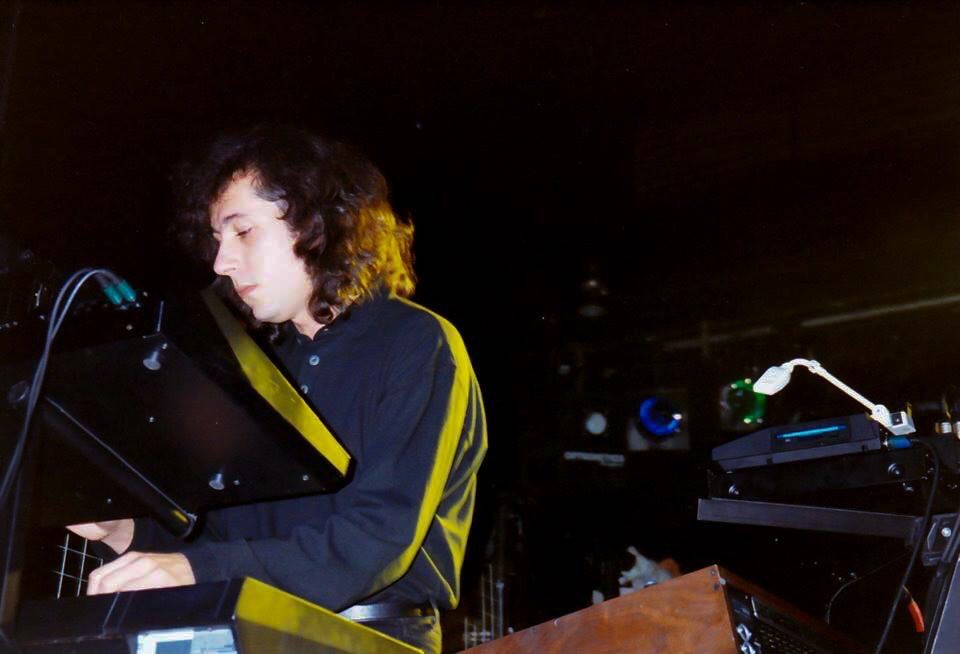
Interview: David Picking

David Picking contributed various electronics, the mournful trumpet solo on the title track and “All The Blue Changes,” and drumming to No-Man’s 2003 album Together We’re Stranger.


How did you first hear about No-Man and where did your involvement with Together We’re Stranger come from? 

I first became aware of No-Man in 1993 when a friend suggested I should check out their debut album, as he thought it had similarities to musical projects that I had been involved in. I bought the album on cassette and enjoyed it, but didn’t monitor the band closely after that.

My proper connection to No-Man came about in 2001. My friend and Gramophone bandmate Jon Cotton had become friends with Stephen Bennett through an online users’ group for Logic (audio software). I sent Stephen some of the instrumental music that I had recorded under the name Rhinoceros. The next thing I knew, I had a message on my answering machine from Tim, saying that he had heard the music and wondered if I would be interested in releasing it via Burning Shed, which was just getting started. He also mentioned that he had spontaneously written lyrics and recorded a vocal for one of the pieces, which was a surprise! (“Made See-Through,” which was later included on My Hotel Year.) An album of my Rhinoceros work, Tea Chest, was released through Burning Shed in 2001, then Tim asked if I wanted to contribute to Together We’re Stranger.

Was it unusual to be sending files back and forth without meeting face to face with Tim and Steven at all?

It seemed like an unusual way of working at the time, although of course it has since become very common. I am a fairly shy and socially anxious person (and I was much more so at that time), so it worked very well for me, as it meant that I could work on my contributions at my own pace without too much pressure. Steven sent me rough mixes of the songs, which were substantially complete. I then spent several weeks experimenting with different sounds and parts and sent back what I thought were the best ones. I had no idea what would actually be used until I heard the final album several months later. Tim has mentioned in interviews that, despite collaborating on a number of different recordings, he and I have never met in person or spoken on the phone, which is true. That was never really a deliberate plan on my part, but it became a sort of running joke and I was curious to see how far we could carry our working relationship on that basis. Pretty far, as it turned out!

How did you get that mournful trumpet sound on the first two tracks of the album? 

Through not being able to play the instrument very well! I didn’t get much direction from Tim and Steven, but one specific exception was that Tim asked me to record some of what he called my ‘asthmatic trumpet’. I am not a trumpet player by any stretch of the imagination, but I had learned the basics on the instrument and managed to get some sort of breathy, quasi-Jon Hassell-like tones out of it which I had used in my own music. I recorded a short section in the transition between the first two songs, as that seemed to be the only place that it could fit, and thought, ‘They won’t use that,’ but… they did. The wisdom of that decision is still questionable in my opinion, but hopefully it works in context.

How much of the spacey electronics and mellotron we hear on the first four tracks is you and how much is Steven’s?

My electronic additions were all subtle, textural sounds; any chordal or melodic parts are Steven’s. The sounds that I added are most noticeable in the transition between “All the Blue Changes” and “The City in a Hundred Ways,” and at the end of “Things I Want to Tell You.

The reissue of Together We’re Stranger included an alternate “drum-mix” of “The Break-Up for Real.” Do you remember anything on why Tim and Steven decided to go with the other, drum-less, version?

Tim indicated at the outset that because the album was going to be quite ambient and minimalistic, it probably wouldn’t call for full-on drum kit parts, but I recorded a simple part for “The Break-Up For Real” (used for the alternate mix) and also a snare drum part for “Photographs in Black and White.” I think that both were rejected because having no drums brought a certain cohesiveness to the overall flow of the album, and it would have been too jarring to break with that on only one or two songs.

Have you remained in contact with Tim and Steven in the years following the release of the album? 

I never had much close contact with Steven, although he asked me to remix a Bass Communion track which was included on the Reconstructions and Recycling album; we had no great reason to remain in touch after that. Tim and I remained in more active contact and we worked together on my second Rhinoceros album and of course My Hotel Year. In more recent years, we lost touch, partly because I no longer live in the UK, and also because I have stopped making music in a professional capacity.

Reflect on your involvement with Tim’s 2004 album “My Hotel Year”

In all honesty, I look back on that album with a certain ambivalence, as I know Tim does himself. I think that it was misrepresented as a Tim solo album, which may have led people to expect something very unified in approach, whereas in reality it was a collection of diverse collaborations with several different people, without a strong connecting thread. In mixing the album, I think I did a decent job in trying to bring a cohesive sound to the material, but it ultimately betrayed its fragmented origins, and maybe that’s why some people found it unsatisfying. Still, over the years I’ve heard people praise certain songs, and it’s gratifying to know that it did have a positive impact on some listeners, even if it remains, as Tim called it, his ‘least loved album’.

Special Thanks to Neil Spragg.

Interview: Richard Barbieri

Photo by Carl Glover

While perhaps better known for his work as a member of 80’s art pop group Japan and as a member of Steven Wilson’s progressive rock outfit Porcupine Tree, Richard Barbieri has contributed to the 1992 No-Man tour and the group’s first and second albums.

How did you first come across No-Man?

We (Jansen Barbieri Karn) were invited to a showcase performance by No Man at a West End club in London. I guess it was to attract press and general interest. Enjoyed the set and it was a fresh sound. Very of it’s time with cool beats but with a more original approach using violin, guitar and good use of sampled instrumentation. We liked it. Tim threw his mic to the floor and walked off during the last number which I imagine was for “artistic effect” After that it was very 50 /50 as to whether we wanted to involved, but we met them again at the studio and Tim’s enthusiasm won us over.

How would you describe Tim’s evolution as a songwriter and Steven’s evolution as a musician?

I think Tim has evolved by making good musical decisions over the years. By that I mean as producer he has chosen a set of diverse artists to work with and experimented with different styles and musical flavours. He’s very strong lyrically I feel. The context in which Tim’s voice and lyrics feature has been the key I think. As to Tim’s own vocal style, it hasn’t changed from day one. I can tell without fail at what point he is going to sing and the phrasing he is going to use.

Steven was overseeing pretty much all the music right from the beginning. He is an unstoppable creative force and can craft songs and arrangements in real time it seems. Working with Steven was strange at first because of the speed at which things move along. I had always been very methodical in my process, discarding many ideas in search of the perfect sound / overdub. So these rollercoaster recording sessions were daunting but I went with it. We had a good connection musically that continues to this day.

Any memorable nights from the No-Man/JBK tour?

The brief No-Man tour was a bit grim but fun as well. That’s basically what touring normally is anyway. Good conversations and jokes. My memory is bad as most people will know by now. I’m sure Steve Jansen will recall a few things.

Richard performing with No-Man during the 1992 tour. Photo courtesy of Loraine Heywood

How did “Heaven Taste” and “Sweetheart Raw” come about?

Errm, they asked us to play on those tracks?
(Steven was kind enough to elaborate on the origin of Heaven Taste in his interview)

Were there any tracks that JBK worked on with No-Man that didn’t make the album?

I can’t recall.

You’re credited with samples on Wild Opera. What songs do you appear on?

I’ve no idea. Presumably they used my performances from another session and placed them within another context on the album?
(Tim was kind enough to elaborate that Taste My Dream is the track in question)

Last year marked the 25th Anniversary of the Bowness/Barbieri album. Looking back are you happy with how well it has stood up over the years? What was the impetus to make an album with Tim in the first place?

Like Steven, Tim was more or less responsible for re igniting my love of music and enthusiasm for the album making process. I was pretty jaded at that point and generally cynical but their positive energy eventually rubbed off on me. Tim and I were both in South London at the time and would meet up a lot and have interesting conversations.

I did listen to some of those tracks recently and I really like what we did. But the technology at the time seemed to restrict a lot of the work I was doing. I had come from a studio environment where engineers were on hand to do all the technical work. That left the artist free to be creative and try multi layering ideas. In the 90’s working on budget restricted projects, a lot of artists invested in home recording technology, which was in my case was 16 track reel to reel Analogue and then ADAT machines. This required me to be engineer and technician as well as “recording artist”. I was still learning about recording, mixing, processing and making all the gear “talk” to each other – so had to compartmentalize my process. So, while I think the material sounds very good, it could’ve been so much better under different circumstances.

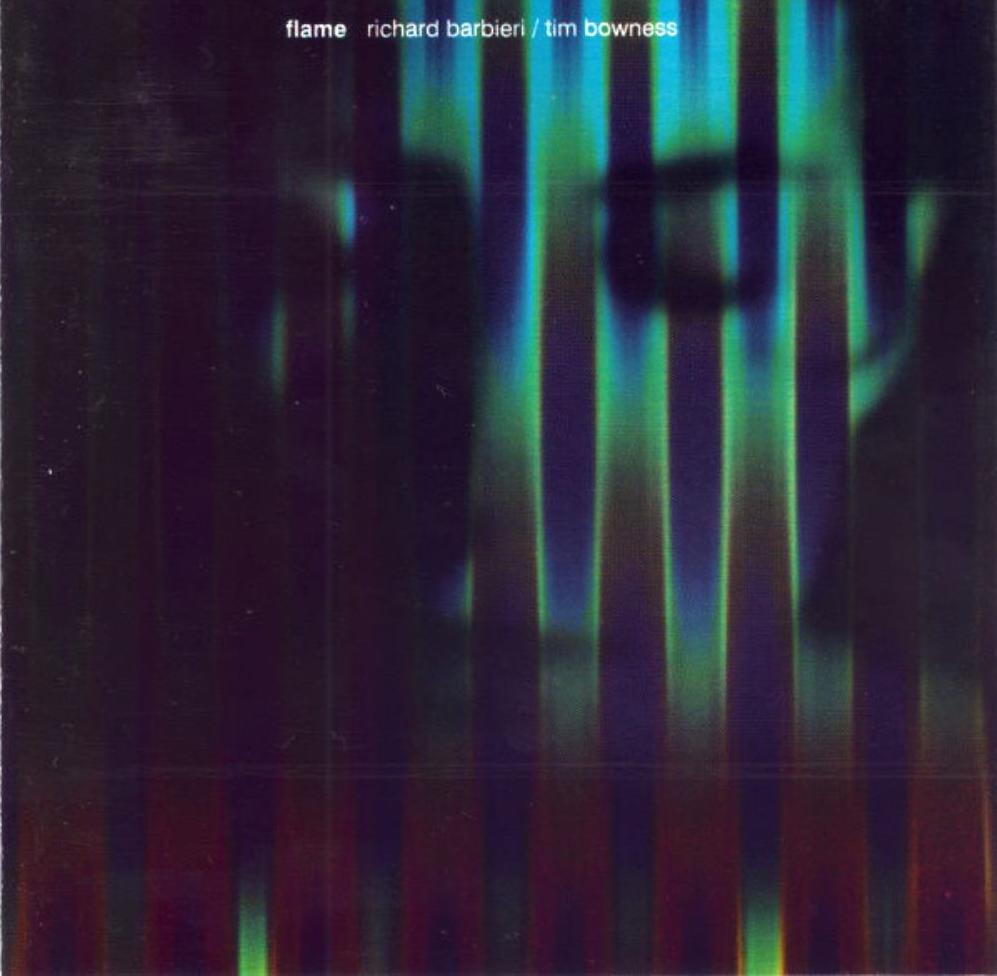
The album cover for Flame by Richard Barbieri and Tim Bowness

And a few others – How has your relationship (both professional and personal) with Steve Jansen evolved from over the years?

On a personal level, it’s been as good as it ever was. On a professional level – we haven’t made an album in 20 years! We have tentatively started throwing some ideas back and forth recently with a view to a new work. No idea how long that process will be, but it will evolve naturally. Or not.

Richard with drummer Steve Jansen during the recording of Japan’s 1980 album Gentlemen Take Polaroids

Interest in Japan (and to a lesser extent the various solo releases) seems to have had a resurgence in the last few years, particularly among people my age. Are you surprised that this has happened?

Probably the increased presence of social media in everyone’s lives has influenced that. Much of the music I’ve been involved in has also proved to have longevity in terms of quality, interest and sales. So with every year comes a new anniversary re issue and renewed interest in the catalogue. This spills over into my solo works and each new release sells better and has a higher profile.

What prompted you to revisit “Buying New Soul” for the Variants series? Both the Porcupine Tree track and your solo version are favorites of mine.

It’s also one of my favorite PT tracks. The original writing session for this took place in the studio with full band and I initiated that particular jam with an ascending / descending sequence of notes that I had stored in my Midi Data filer. I started overlaying more keyboard lines and chords over that part and we used that as the intro to the song and also used my chords for the verses.

I decided to use that intro part to incorporate into a new piece of music for one of my “Variants” EPs.

Richard’s take on the Porcupine Tree track “Buying New Soul.” Released on 2019’s Variants 5

Will the version of “Idiot Prayer” originally prepared for the Variants series ever get released?

I might release that on Bandcamp, with Steven and Colin’s permission.

How did the decision to expand Porcupine Tree to Bandcamp come about?

My idea. Since the presence of PT music on Spotify is something I’ve always voted and argued against, I thought why not make available some of PT’s rare or live music on a platform that actually would make us some money. So I put that to the band and they agreed to give this a try and it’s been worthwhile of course.

Music to me has a monetary value and there should be no shame in wanting to be paid for your work and talent. It means more to me if 10 people bought a cd as opposed to 1000 people giving it a listen for free.

Any new archival material in the works for Bandcamp?

There are some possibilities for Bandcamp going forward. I like the fact that I can apportion some works to labels with conventional promotion and some more obscurer pieces to Bandcamp where you can focus on your hardcore supporters who are interested in the more eclectic material.

And finally, do you think Mick would be happy with the renewed interest in his work and JBK as a whole?

Mick would be happy to know that his work still means so much to people.

Richard’s new album, Under a Spell, is available to purchase via KScope.

Interview: Philip Ilson

Philip Ilson is a British filmmaker who created the distinctive live projections and directed two music videos for No-Man. He is currently the artistic director of the London Short Film Festival for 2021.

How did you first hear about and get involved with the band?

Quite a roundabout convoluted route. It’s a long story! As a bit of background, I’d studied photography and had been in my own indie bands in the 80s (not very successful – Bull & Gate indie circuit). I’d also photographed some friends bands as well as being involved in some low-budget filmmaking with my old schoolfriend Tim Harding, using our Dad’s super and video cameras. In the late 80s, I temped at an oil company (just an Office Angels clerical temp role to earn money), and I met a guy (another temp), John Mason, who played bass in his old uni band (from Thames Poly, called The Go Hole). We became really good friends and I saw the band a few times (they had an indie single out that was being well recieved), and as the 80s turned to the 90s, and psychedelic indie-dance was becoming a thing off the back of Primal Scream’s ‘Screamadelica’, so The Go Hole changed their name to Sp!n, and I took on the role of supplying live visuals, using old super 8 projectors and slide projectors, using what I’d learnt from my photography and filmmaking days. The band got signed to producer Stephen Street’s (The Smiths) label, Foundation, and they started touring the country – indie clubs and student union bars, and support slots for the likes of The Darling Buds and A Thousand Yard Stare.

One of the London clubs that Sp!n played was called The Flag, which was an odd choice as it was mainly electronic Goth bands that played there, kind of with a Gary Numan influence. The guy who ran it, called Frank (I think), said he had a band who’d played the club a few times called Noman, and they were interested in a live visual element, and he put me in touch with Steven Wilson to discuss.

Just to follow on the Sp!n story for a moment, I toured extensively for a couple of years with them around the UK, either in the band tour van or my own car. Unfortunately, one night, they had an accident on the M40 motorway (I was in my own car that night, as my then girlfriend was with me) coming back from a gig in Dudley. No one was killed, but John had extensive brain damage after being in a coma for 11 days. The band didn’t split up (though John could no longer continue on bass), but the singer also left (which he was planning to do before the accident), and they recruited a new singer Martin Rossiter, and recorded a new single and continued playing live, with me continuing on the visuals, even playing a gig in Switzerland supporting Echo & the Bunnymen and The La’s. But it all seemed over for them, so they went through a major period of re-invention, changing their name to Gene, and moving toward a more Mod / Britpop sound – no psychedlia, no visuals required, which was fine by me, as I wasn’t really into continuing. Though as you may know, with this name change and new sound, Gene did break through in the Britpop 90s and had considerable success touring the world, appearing on Top of the Pops, well into the early 00s.

What would you say your role was in regards to the live shows and how did that change over time?

Interestingly, I’m not too sure what I did for the early Noman gigs where I created visuals, and to be honest, I’m not too sure where my involvement started with them. As I already had the visual stuff (film loops and slides) I was using for Sp!n, thinking back I doubt very much I would’ve re-cycled that stuff for Noman, which wouldn’t have been fair. As Noman were signed to One Little Indian, they had a budget (also, this was different to working for Sp!n as this had evolved through my friendship with them), so thinking back, maybe the first visuals I did were what they commissioned – the ones that got used at the Clapham Grand show.

Also, it wasn’t just me – I mentioned my old friend Tim, and he was very present in creating the work we made for Noman visual projections. I know we shot on 16mm film, like a short film to go with various tracks, and we shot set-ups using our girlfriends and other friends, dressed at the Virgin Mary, Krishna, an angel, or rolling around in flowers. I think these were what premiered at the Clapham Grand.

How did the backing projections evolve over the various live shows from that era?

I don’t think they did. The films we made were the films that were used, but I’m not sure where else they were played out, in terms of other gigs.

Do any of these backing projections still survive and if so, any way to see them?

Yes, I have a whole archive of film stuff I made, and the 16mm rolls exist, as do the masters of the music videos.

What was the artistic vision behind the Sweetheart Raw and You Grow More Beautiful videos?

Again, these were collaborative projects between me and Tim (Harding). Our whole aesthetic at that time was kitsch religious iconography, gaudy colours, and a low-budget aesthetic of double-exposure – we’d made some other short films, about Adam & Eve, about fairies on stone circles, 50s style B&W horror. There was also some flower imagery crossover from the Sp!n visuals. A lot of this imagery fitted with the romanticism of Noman’s music and lyrics at the time, so it was a good creative marriage.

Sweetheart Raw music video directed by Philip Ilson

Were you involved with the Only Baby video? (Tim won’t share much beyond that it was dreadful!)

Good question! I can’t remember. Was this the one where they thought as a more commercial ‘pop’ single, it would requite a more commercial video? I’d have to go into the archive. 

Do you have any photos from any of the live shows? I haven’t been able to find anything for the 1993 tour and only a handful of photos from the 1992 tour.

Yes, I have a few of the Clapham Grand show (though they’re not very good), and also a fair amount of photos of us making the visuals and the music videos.

Have you followed the band’s work in the time since?

It was no secret to Tim and Steven that Noman wasn’t really my kind of thing musically. Of course, I loved working on the videos and shows, and got to love those songs of that period, but once I’d stopped working with them, I didn’t hear any later stuff. Same with Porcupine Tree; I don’t think I’ve ever heard anything by Porcupine Tree.

Facebook has allowed me to stay in touch a little bit with people I met through Noman even if I don’t see them – I see Michael Bearpark’s posts, and have followed what Peter Chilvers has been doing with Brian Eno, and when I visit Alison and Tim in Guilford, we talk about other people from that time: producer David Kosten, and other musicians, but with Tim and Steven not really on social media, I’ve lost touch with them.

Also, everything you do, particually in the creative world, leads to the things you end up doing, and all the work I did in film, photography, visuals and music, lead to my current roles in film festivals, for sure.


Interview: Ben Coleman

In performance during the early 90’s. | Taken from the Returning documentary

From 1988 to 1994, Ben Coleman’s distinctive violin playing graced multiple No-Man releases and live shows.

What made you pick up the violin in the first place?

In the first place… was walking with my dad, downtown near the coast and heard a sound I never heard before.. it was a fiddler on the street corner, when I looked all I saw was a scroll .. I was captivated by the image and the concept of the violin as my future instrument was born.. I was 4 years old.

Who would you say were your influences

Stephane Grappelli & Jean Luc Ponty all the way dude. Couldn’t get enough of these guys in my teens. In the 90’s I met Nigel Kennedy who is a great guy and now friend who also totally influenced me as well.

How did you first hear about No-Man and what were your first impressions of Tim and Steven?

I saw an add in the Melody Maker that was looking for a violin player to join a writing duo, I found that very interesting and made contact.. and as they say: the rest is…

I found the lads very creative and was quite impressed with Tim’s voice. I enjoyed the combination of sounds we created together.

No-Man in performance with JBK during the 1992 tour | Photo courtesy of Shaun Cullen

What did you see your role as in the creative process for No-Man and how did that change over time?

My role in the creative process was to enhance melody lines and come up with the occasional solo to nudge the piece in the direction it naturally dictated. This was first and foremost my role and didn’t really change as they were the original writers. I came last into the equation at that early stage.

How did “Housekeeping,” “Heaven Taste” & “Sweetheart Raw” come about and can you go into detail about the recording process for the tracks?

The 3 tracks you mentioned were played to me and I obviously liked them a lot and was trying different ideas on them until we all decided upon the ones that worked the best for the tracks. As usual for me the songs naturally suggested what is likely to come, and what could possibly enhance and define. It was very enjoyable working on the songs and sounds and taking them in the direction they ended up as.

What were the early No-Man live shows like?

Early No-Man shows were fairly standard and not terribly exciting for me as we were all young and not very experienced doing “live.” Let’s just say they weren’t overly animated. As we progressed we found our feet so to speak and became  naturally much more comfortable on stage hence giving shows that were better received.

Working with JBK was a little bit difficult for me personally as these boys have come from a very rich background of live performances and knew each other very well. So jelling with them wasn’t an overnight thing and I believe that had a  some what knock on effect on the live shows, the recording process with them was much more comfortable as we had the time to tweak away and present the compositions in a much more relaxed & favorable way.

No-Man along with JBK performing Days In The Trees | Originally taken from BBC Sessions (1992 – 1996)

Both Tim and Steven have expressed some misgivings about Loveblows & Lovecries along with Lovesighs and the singles from that period. Do you feel the same way? In your eyes how has the material held up?

I don’t have any special memories about Loveblows. I think we tried to please One little Indian and that compromised our output somewhat.

Flowermouth turned 20 last year. What are your feelings about the album as a whole? Are you happy with how the material has held up over the years?

For me personally, I believe this record held within it the “classic No-Man spirit” and we stuck to our musical vision in a much stronger way. Fripp & Carr enhanced the music no end and it was very exciting experience for me personally at the time (even if I was on tea duties). The material held its own in my opinion and I believe it stood the test of time, a testimony to a bunch of well written & well produced classic songs. A good moment for No-Man.

The track “Things Change” from Flowermouth ends with a fearsome solo from you. How did that come about? Was that originally part of the demo or something added on the fly?

The solo on “Things Change” was playing in my mind after listening to the track a few times. When I finally recorded it, it was like it was there already and all I had to do is put the actual notes down .. a somewhat weird and wonderful experience.

You departed the band shortly before work on Flowermouth finished? How did that come about?

My departure from the band at the time came because of artistic differences. We were all much younger and full of artistic passion which ran higher that it probably should have. That was then and now things would have probably been solved differently, I’m quite sure of that.

What are your impressions of No-Man’s later albums like Returning Jesus and Together We’re Stranger?

The later albums that came after my departure have a sense of melancholy About them I find, beautiful with an air of sadness 

How did your involvement with the Porcupine Tree track “What Happens Now?” come about?

My involvement with “What Happens Now?” came about as I was asked if I could contribute to the composition by Steven. I loved the drama and ambiance of it and found the track very interesting and it inspired me to do the solo. The track suggested a certain flair & feel and I did my best to accommodate it.

Porcupine Tree performing “What Happens Now?” in Tilburg. In a live setting, Ben’s violin would be replaced by guitars

How did you end up working with the Italian artist Alice?

Regarding the tour with JBK and Alice.. I was asked by them if I would like to tour and This was quite an exiting prospect At that time and a great opportunity to travel Europe and meet other musicians. It was a lovely interesting experience..

You made an unexpected return to the stage with Steven and Tim in 2008. What was it like performing with them for the first time since 1993? 

My 2008 guest performance with the band was interesting as I found the sound changed lots in the live context, it was louder and rockier obviously. It was a good experience.

Ben in performance with No-Man for the first time since 1993

You worked with David Gilmour (former Pink Floyd guitarist) for a bit. What exactly did you collaborate on him with?

Regarding D. Gilmour, I was in a band with Nick Laired Clowes (Dream Academy lead singer/songwriter) at the time who is a close friend of David,( the bands name was Trashmonk). It was around 2002 and David had a tour planned and I cheekily suggested Nick should ask David if we could be the warm up band to which he said yes. We later did a few more musical endeavors and collaborations on some other projects that Nick was working on at the time.

Tim recently expressed interest in touring No-Man in a radically different format than the 2008 and 2012 tour. Would you be interested in performing as part of No-Man again?

Of course I would be very happy to collaborate on a future live show with Steven & Tim again. After all this time and our gained musical experience, I feel it could be very promising .

An unexpected reunion after Porcupine Tree’s final show of 2022.

(Special thanks to Anil Prasad, Jakub Kurek, Mike Bearpark and Richard Smith for their assistance)

Interview: Pete Morgan

Pete Morgan has been the bassist for the No-Man live band since 2008. He is also a co-founder of BurningShed alongside Tim and Pete Chilvers in addition to the founder of NoiseBox Records. His solo releases can be found under the alias UXB

 How did you first meet Tim Bowness and can you speak to his’s evolution as a songwriter?

We were both on the same bill at the Lady Owen Arms in Angel, Islington 1989. I was a one-and band (The Bushbabies) and they were still No Man Is An Island with backing tapes. They were excellent. I was not. We were both supporting a band called Venus Fly Trap who I can’t recall anything about.
Tim came up and spoke to me after the gig and got my details (he is/was always very good at ‘networking’) and he stayed in touch over the years. He’s always been very strong at songwriting though those early NM things don’t tend to have middle eights as they are often built around a groove/breakbeat.

How did you get involved with the No-Man live band?

I was asked to play with Tim’s solo band around the time of the My Hotel Year album and that band became the de facto No-Man backing band when the idea of some live dates arose.

How would you say the live band has evolved between the short 2008 tour and the longer 2012 tour?

We got a bit better at playing the songs and interpreting them in our own way (so that they were not always trying to replicate the records)

Performing “Mixtaped” as part of the Love & Endings live album

Any plans on the horizon for the band to tour the material from Love You To Bits?

None that I know of, sorry. 

How would you say the arrangements of tracks differed from the studio to live performances when it comes to bass playing?

Well, the most obvious thing is that some basslines were programmed and I’m playing them live. Also, some were played on a double bass by Colin Edwin and he has a different style to me so I have to interpret them my own way sometimes

What’s the deal with Tim and the track Housewives Hooked on Heroin? Seem’s like a very unusual choice to revive for live performance.

It was a bit of a joke in the rehearsal room. We tried out lots of other songs that never made it into the set because they just didn’t work with the band (from memory: Chelsea Cap, Break Heaven, Teardrop Fall). Housewives was ‘ok’ but we weren’t convinced by it. After every gig we’d go offstage and the audience would call for an encore and Tim would jokingly say “Housewives Hooked On Heroin”? So, one night we decided to call his bluff and say a big collective “Yes, ok”. We played it once and once only. Mainly as it was a bit of a shambles!

What was the impetus for the formation of BurningShed?

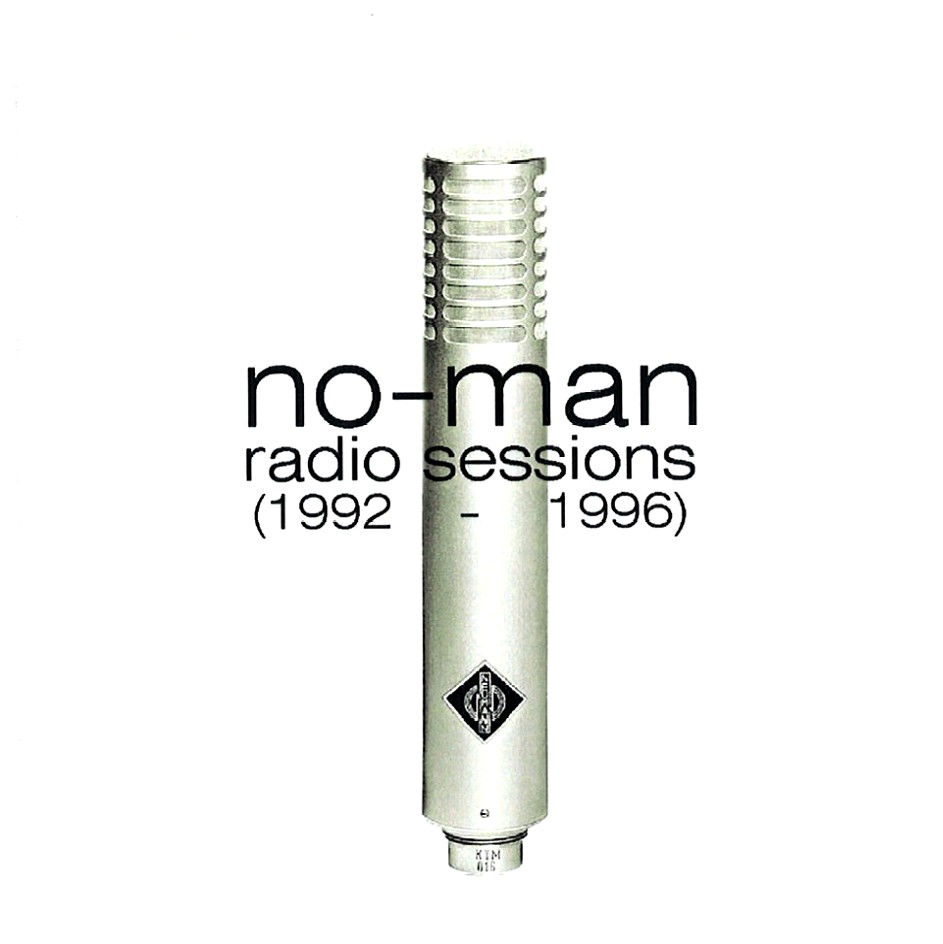
I was living in Norwich from 1991 onwards and Tim moved here around 1999/2000. I was making CDs for him (No-Man ‘Radio Sessions’) that he was selling by mail-order to fans.

He and Peter Chilvers came to me with an idea about setting up a label that would only ‘burn’ CDRs to order (hence “Burning” Shed). They wanted me to just make the discs but I suggested that we become a 3-way partnership and that I would make the discs and run the business side, Tim would find the artists and Peter would build the website.

I had just given up running a more traditional label (Noisebox Records) after 50 releases of pressing up 500/1000 copies and trying to get them into shops so the idea of selling online one-order-at-a-time appealed to me.

Fan-made cover for the No-Man – Radio Sessions (1992-1996) release

How exactly does BurningShed go about adding artists to its roster?

Do we like it/them, is there a connection to things we already do, will it sell (e.g. we get sent a lot of great ambient music but we know it will only sell 10 copies)

How did you manage to get King Crimson to sell through BurningShed?

Tim had a connection to Robert Fripp since the Flowermouth sessions and was in touch with Declan who runs the label for King Crimson. We started off stocking the ‘In The Court…’ boxset and they were impressed by how many we sold and the way we handled the orders so they agreed to let us take on the whole store.

How has the shift from physical media to digital/streaming affected the way BurningShed operates?  

It hasn’t really. We keep being told we should do an artist-led, ethical streaming service but our customers like physical things to have, listen to and collect. 

We all use streaming to listen to things but there’s no replacement for owning a physical copy of an album. As we always say, you can’t sell a second hand download…and you never know when that album you love will drop off the streaming services because the rights have gone or a low-selling artist can’t afford to keep it on there any more.

Interview: Carl Glover

Carl Glover is a graphic artist who specializes in album artwork. He has created pieces for the like of King Crimson, The Pineapple Thief and No-Man. Carl was kind enough to answer some of my questions about his creative process and his work with Tim and Steven.

What’s your design philosophy when it comes to albums?

Ideally, making the album look like it sounds. Talking to the artists helps with this as they will give clues for the direction it should be taking.

How do you go about designing album covers? Is there a process you usually go through? Does it change depending on the artist/band? 

I let a few days pass before doing anything so ideas can drop in place, usually this occurs during a long walk around London. It’s an inspirational place for me. Train journeys seem to be good for ideas too.

You initially started out with Bill Smith Studio. How did your time there influence your current work?

I started as a designer at i-D magazine, which was a baptism of fire as I started working there immediately after the job interview. It was a great place for learning things and a lot of interesting people would pass through, the money was dreadful but the fun was unbelievable – I ended up in a Wham! video because of i-D magazine! After i-D I went to Mainartery designing album covers for a few years, for some reason I was the typography guy. I worked on a lot of chart hits at Mainartery, stuff I would never be associated with now like Rick Astley, Sinitta, and the Blow Monkeys. I joined Bill Smith Studio in November 1988, I had a lot of freedom at BSS which was great as it gave me the confidence to start up my own business. After BSS I was Senior designer, then Art Director at Getty Images, but had my company Aleph Studio doing album covers running parallel. I went full-time in Summer 2003.

The work was very varied, all of us at the studio rarely had a choice on what the next assignment would be. It was more a case of who was free at the time, consequently I did a lot of covers for pop, soul, house, rap, rock and electronic artists. I learned more about what I didn’t want to do if given the chance, I valued timeless covers as a result. 

Were you involved with the cover of Flowermouth and/or Marillion – Brave during your time there?

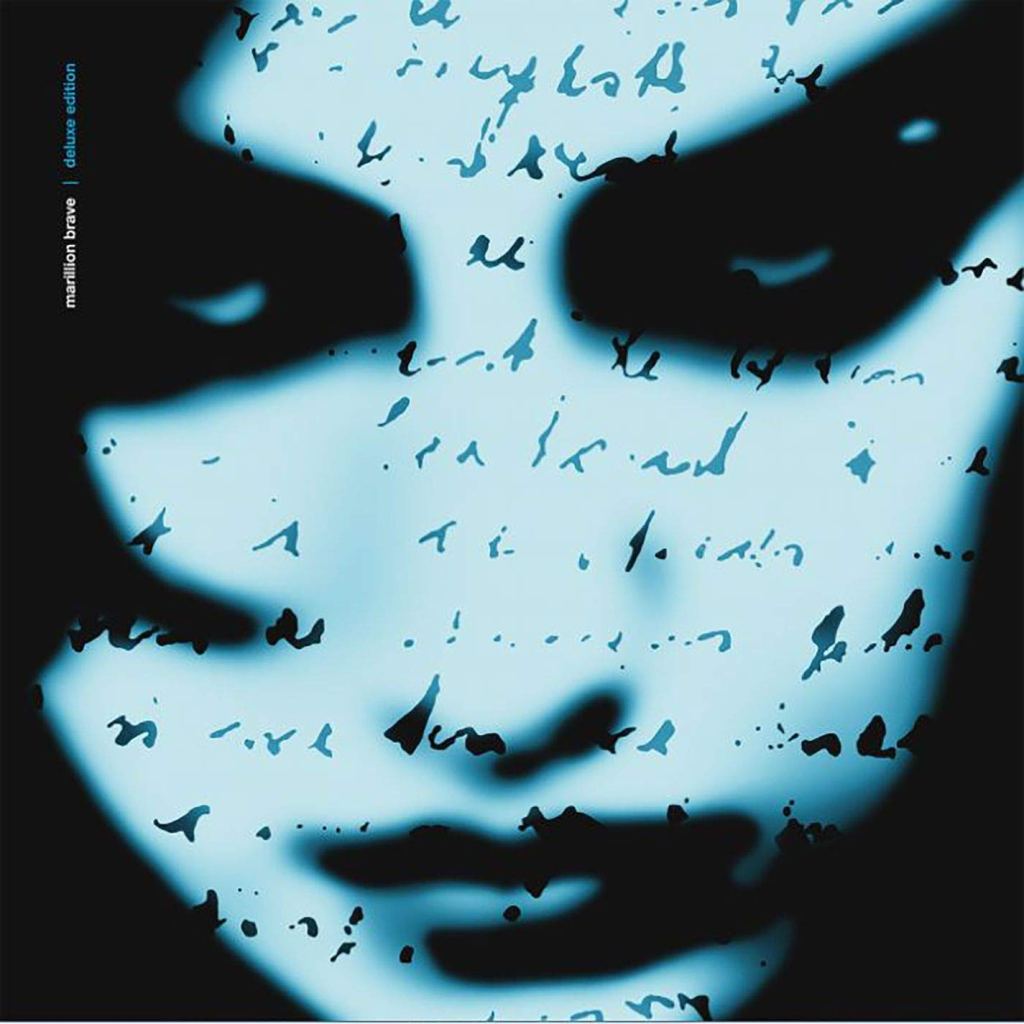
I designed Flowermouth and Brave while at BSS. No-man got in touch based on their liking of Marillion’s Brave, King Crimson’s THRAK, and Led Zeppelin’s Remasters all of which I had worked on at the time.

The striking cover of the 2018 reissue of Marillion – Brave

Do you listen to the album before creating the artwork and what do you gain from it if you do?

Sometimes, but not much. The conversations at the beginning do most of the heavy lifting. A good title will help tremendously.

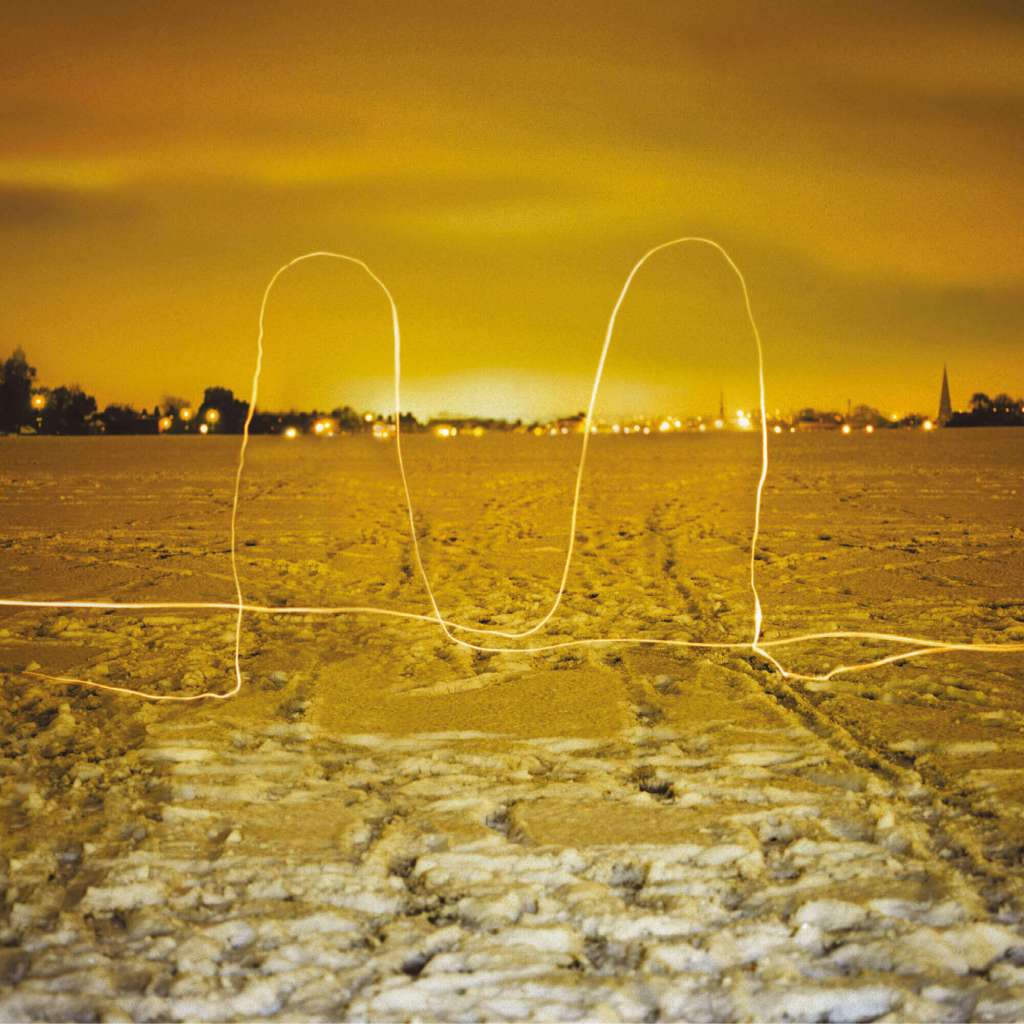
What exactly is on the cover of Together We’re Stranger?

It’s a light trail made by a torch, made to look like it was going around two people. I wanted to show absence. I used one person, who moved sideways after the first pass with the torch to make space for the second outline.

Cover for Together We’re Stranger

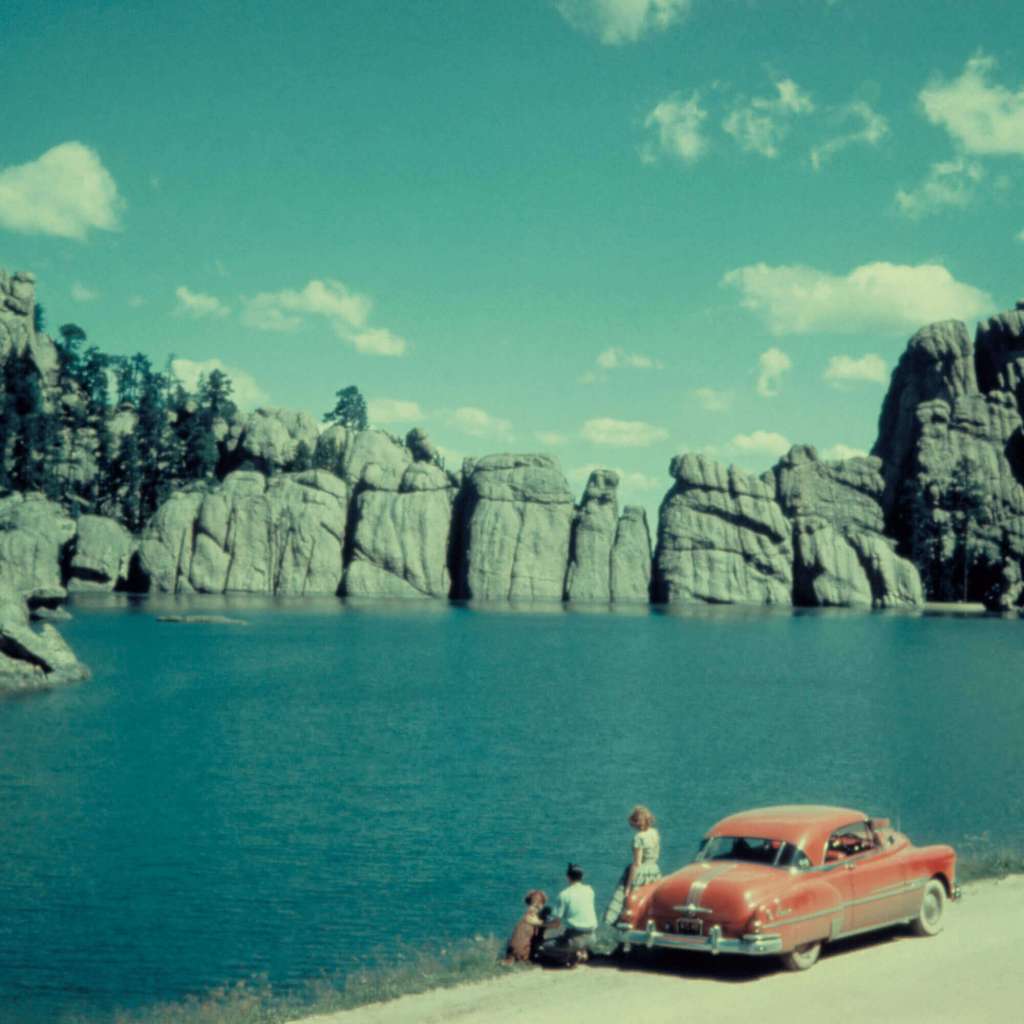
Why was the artwork changed between the original 1996 version and the 2010 re-release of Wild Opera?

I didn’t have the artwork any more for the original version that I did at BSS, so used ‘new’ old imagery from my archive of vintage slides – the band and the label were very happy with it at the time.

What are your thoughts on the first two No-Man album covers (Loveblow and Lovecries – A Confession and Flowermouth)?

I like them both, I tend to think that a good no-man album cover would work well as a book cover and these two fit the bill perfectly. Paul White is a brilliant designer, some of his work with Bjork is amazing.

Why do you think Tim and Steven return to your artwork for new No-Man album covers?

I’ll ask Tim, it’s better coming from one of the band, otherwise I be making guesses.I really don’t know.

When we first signed to One Little Indian, no-man were locked into using the company’s in-house designer Paul White. Paul’s work was great, but not wholly suitable for the music of no-man. After the label and Paul had a dispute, the band were allowed to select their designer of choice. I’d been greatly impressed with the design on the King Crimson box set Frame By Frame and suggested we go to Bill Smith Studio. Though Bill was the name on the door, Carl Glover had been the person responsible for a lot of the work we liked by the studio. For me, Carl’s work managed to combine directness and mystery, and accessibility and experiment equally. In some ways, I saw what he was doing as a distinctive updating of styles I loved (1970s Hipgnosis and 1980s Peter Saville/Factory Records). We immediately hit it off with Carl on a personal level and all sides were delighted with the first results of our collaboration (Flowermouth). Since then, Carl’s artwork has become an important factor in promoting no-man and I feel that his imagery very effectively tangentially captures the essence of the music. My personal favourite covers are Together We’re Stranger, Love You To Bits and Flowermouth. Carl’s recent work for Plenty (It Could Be Home) was another case of an ideal meeting of image and music.

Tim Bowness via Carl Glover
Cover for the single and cassette version of Love You To Bits

Where there any pieces you did for Porcupine Tree, Steven Wilson or No-Man that were rejected?

Hundreds. Most ideas are rejected, I tend to do six initially, but that can expand when dealing with more than one decision maker. Some of those rejected ideas find new homes over the years. It’s all part of what album design is about. It’s great when a personal favorite gets chosen.

How did your involvement with The Pineapple Thief – Your Wilderness come about? 

Richard Beeching at Kscope got in touch asking for scans from old slides in my archive, I sent 90 across which I thought worked well with the title. They chose 22. I’ve collected slides and negatives since I was teenager back in the 1970s, there are tens of thousands of them.

How has the change from Vinyl to CD’s and now to streaming affected album artwork?

Not much as the shape remains the same throughout. LPs are the most fun to do but most people would feel the same I think. The last couple of streaming jobs I worked on have had sister-images to the album image for all the tracks, which has made them more worthwhile to do. I prefer printed matter.

Cover for the re-release of Wild Opera

Carl was kind enough to also answer my follow up questions

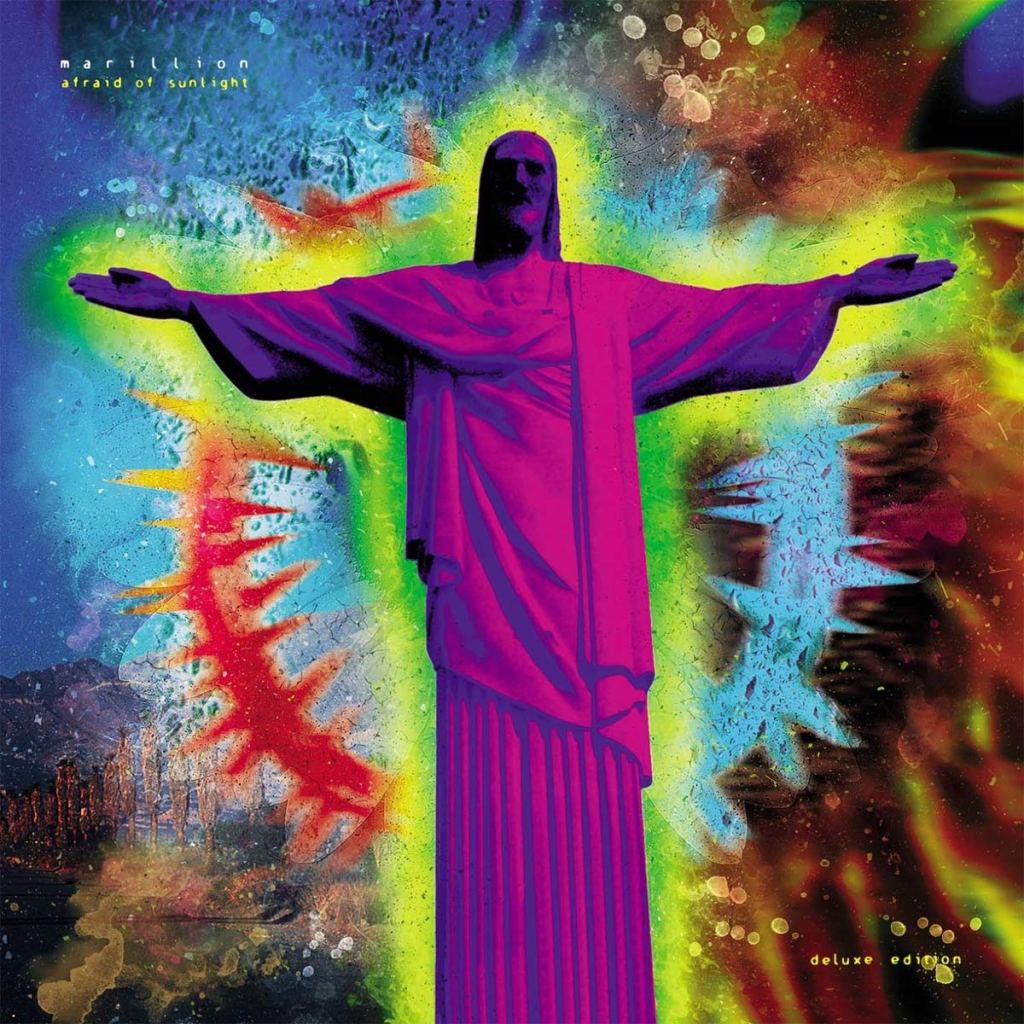
Where did the decision to re-do the artwork for Marillion – Afraid of Sunlight come from for the deluxe edition?

The decision lay with the band – they weren’t happy with the original sleeve and neither was I. The 1995 sleeve was the result of the record label interfering with the cover chosen by the band – they originally chose what happened to be the cover that you see now on the deluxe edition.

“Day-Glo Jesus” – The cover for the 2019 deluxe edition of Afraid of Sunlight

Both you and Lasse Hollie have worked extensively with Steven over the years. How would you compare your style and approach to his?

Very different – most of my photographic work is a means to an end, the subject is what I wish to show. Lasse is best described as an expressionist, his work is of an extremely atmospheric nature akin to artists like Edvard Munch or Francis Bacon. He’s a great guy with a brilliant sense of humor too, it’s our stylistic differences that makes it work I think. 

How did the THRAK album cover and your involvement with King Crimson come about?

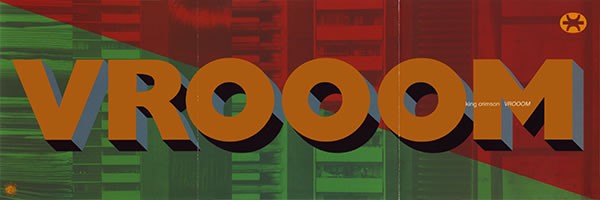
I did the design for THRAK as a result of working on VROOOM a while before. For VROOOM I was given a set of black and white photographs by my boss Bill, and told to do something interesting with them for a CD cover. The result was VROOOM – the type was inspired the lettering on an old butchers van I remembered from my childhood, I liked the shading. I worked on THRAK as a result of that. Once again I was supplied images collated by Bill: all visually representing the sound made by the album title, I was given free reign regarding the appearance of the package. 

Were there any other King Crimson pieces you worked on?

The Great Deceiver box set, Frame by Frame box set, The First Three box set, California Guitar Trio, B’Boom, The Robert Fripp String Quintet and a few of the Soundscapes albums all spring to mind but I’m sure I’ve missed a few!

Cover for the 1994 King Crimson EP VROOOM

How did the Deadwing and Marbles album covers come about? Were there any alternate version’s created?

Regarding Deadwing, most of the heavy lifting had been done before it reached me – the band had already decided on the cover image and I was supplied with all that I needed pictorially, it was just a case of putting it together and making sure that it printed ok.

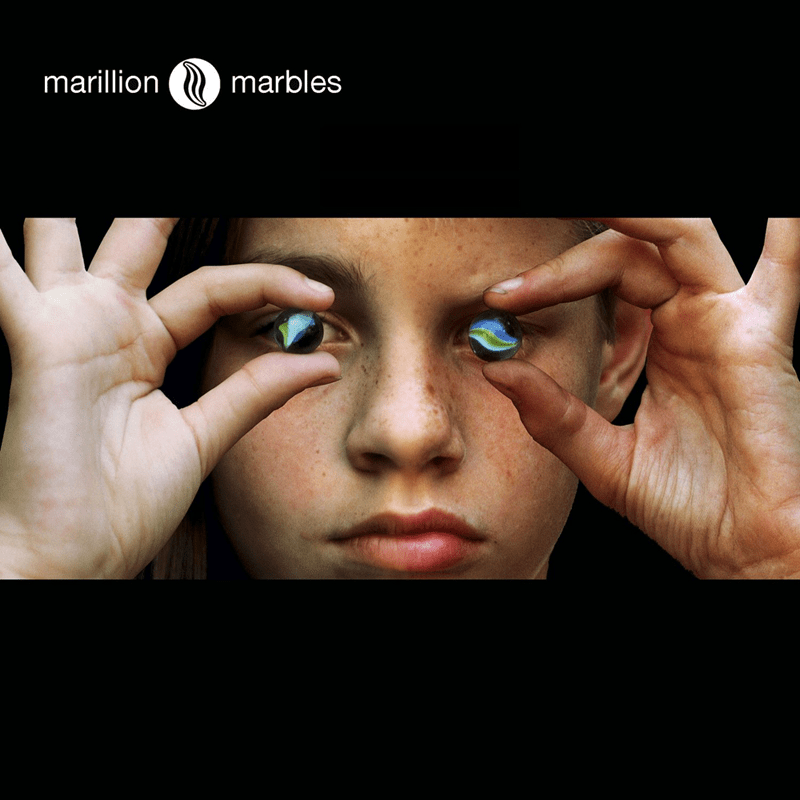
Marbles had a difficult birth cover-wise but I was pleased with how it turned out, especially since some of the alternate cover ideas became divider-spreads between song imagery in the 128 page special edition. There were about a dozen or so Marbles cover ideas, what was chosen was definitely the best!

The cover for Marillion’s 2004 album Marbles

Who would you say are your biggest influences when it comes to design and artwork?

Regarding people, I’d say Peter Saville would be number one, followed by Barney Bubbles, Wim Crouwel, Josef Müller-Brockman, Marcus Keef, Martin Sharp, and early Hipgnosis.

It was only with hindsight that I noticed that the area I grew up in (Hoo St Werburgh) was an enormous influence, especially the marshland with its curious structures from WWII scattered about in it. Objects have an unearthly presence in that landscape. I still find it inspirational but I wouldn’t want to live there again.

Where did your passion for collecting the slides and negatives (like those used for Your Wilderness) come from?

I find all photography fascinating, and believe that everyone has the potential of taking good pictures. I have always collected things, starting with the usual fossils, stamps, records, eventually leading to 1930s radios, synthesisers, guitars, ribbon microphones, art books, and lately cold-war pilot helmets…

One of the big motivations in collecting slides and negatives is seeing how we used to live. I also have a thing for the muted vibrancy found in old Kodachromes – somehow the most mundane subject becomes a piece of art by its colours alone.

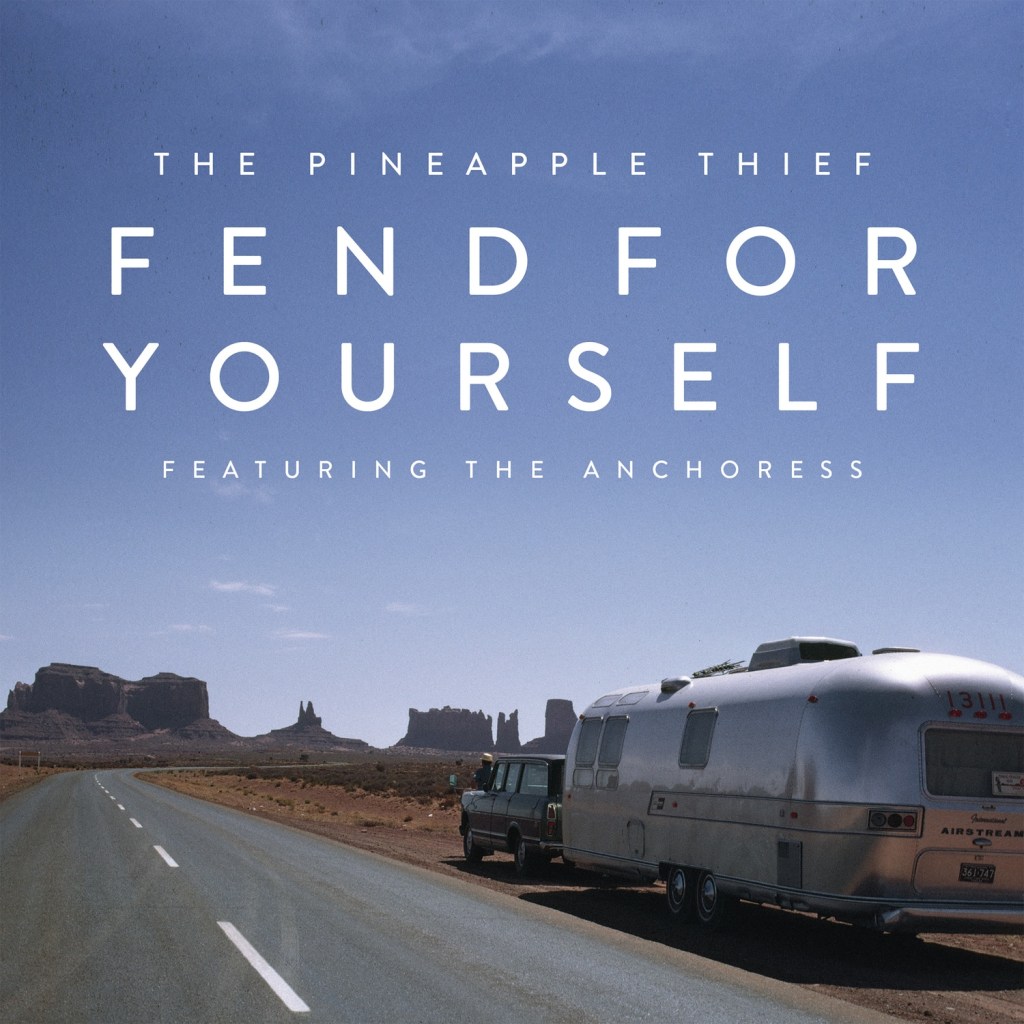
Cover for the 2017 The Pineapple Thief single “Fend For Yourself”

Interview: Giancarlo Erra

While perhaps best known as the front man of the prog band Nosound, Giancarlo has a writing credit on the song “Beautiful Songs You Should Know” off of Schoolyard Ghosts

What is the story behind “Beautiful Songs You Should Know” and how did come to meet Tim Bowness?

Beautiful Songs You Should Know indeed stems from the start of our collaboration with Tim, that dates back to more than 10 years ago. We started working in 2008 I think, when we did “Someone Starts To Fade Away” for Nosound’s album Lightdark. But we were in contact before as Tim liked Nosound’s first album Sol29 and helped us selling it on Burning Shed.

After our collaboration on Lightdark album, we decided to do more and the bases for Memories Of Machines project were born. Our collaboration was joining my music with his unmistakable voice and lyrics/melodies, and we started working on and recording MoM first album Warm Winter.

In the meantime we also decided to meet in New York where Tim was living at the time, and there we recorded most of the album demos and parts that eventually made it to the final album.

Then in 2009 I moved to UK also helping Tim and Pete Morgan with Burning Shed and expanding my music work, so things accelerated as at first I was actually living with Tim so the work on the album was intense.

Beautiful Songs was one of the first we did, and one that immediately captured both of us, and I can still remember how easily it resonated with Tim and how quickly we knew it was going to be one of the main songs. I particularly loved the lyrics of that one, and so I was very happy when Tim asked me to have it also included in No-Man Schoolyard’s Ghosts (that contains other elements that were also present during MoM sessions).

What made you seek out Chris Maitland (ex-Porcupine Tree/No-Man drummer) for Nosound’s 2013 album Afterthoughs

As for Chris’ collaboration, it was a combination of factors to be honest. First of all Chris has always been one of my favourite drummers, being very dynamic and “alive” instead of overly technical while playing, and I always thought was a great loss that ended an important phase for Porcupine Tree. So as we were in contact and I always wanted to work with him, during a change of drummer in Nosound I decided it was the right time to ask him to work with me, and he gladly accepted. We met in Rome for some pre-production and then we recorded the whole album over a week in London, and it was a great time and surely a drummer that imprinted his own sound on Afterthoughts.

Interview: Andrew Booker

Andrew has been No-Man’s live drummer since 2008.

How did you first hear of the band?

I’d heard of Tim first. I’d seen his Flame album (with Richard Barbieri) in Our Price in Muswell Hill in 1995, with artwork by the Bill Smith studio, same as the new King Crimson Vrooom album. I then joined a band that I later found out Tim and Steven were friends with. We were doing a gig in Cambridge in May 1996, and in the pub at some point someone pointed out that the guy in the stripy top was Tim Bowness. I met up with Tim properly a few weeks later and found out about No-Man. Somehow I ended up with at least one compilation cassette, either from him or another friend, and was hooked.

Was there an audition process to become the live drummer or did Tim/Steven ask you?

There was no audition, I was lucky there! I think Tim and Steven both said they would use me if they ever put another live band together. That was back in 1997 or 1998. Tim put a solo band together in 2004 and offered me the job. I was using electronic drums at that point, which worked out well, as they fitted the music and could be used quietly without drowning him out. The 2008 live band was essentially Tim’s live band.

How would you say the live band has evolved between the short 2008 tour and the longer 2012 tour?

I would say there was a significant increase in confidence all round. Tim’s vocals were struggling to compete with the band in 2008, but a year or so later he got himself a new microphone which worked much better for him on stage, and suddenly he was blasting out. Also I think he adjusted his delivery slightly for live singing, and has been sounding great on stage ever since. I think Steven was more at ease with the band in the later shows. He’d not worked with any of us before in 2008. He was more relaxed in rehearsals in 2011/2012, knowing that we could pull off a good show! As for the band sound, there was a bit less of an effort to try and recreate the sounds of the recordings in 2011, not that there was much in 2008. We dropped the likes of All Sweet Things, Truenorth and Returning Jesus, for which we had attempted a similar feel to the originals, and replaced them with My Revenge On Seattle and Beaten By Love, for which we had put together our own band arrangements as we liked, with our own sounds. I’m not sure if anyone else was doing anything especially different, give or take a change of amp. The main thing for my part was that I switched to acoustic drums, which completely changed my game. Also my playing was a lot stronger in 2012. I’d joined Sanguine Hum earlier that year and was getting a regular workout.

When Beaten By Love was revived, did Tim and Steven let you hear the original demo?

Tim sent it round, with suggestions for how the live band could go about structuring a live version in preparation for the 2011 Leamington gig. I’ve forgotten the demo, as we immediately set about making a live band version in our own way, and I now only remember that. The version we came up with initially was quite upbeat. Steven then joined the rehearsals and deemed it far too jaunty, mainly because of what I was doing! Hence the more sombre funeral-march feel of the live version. After the Leamington gig we got together in Steve Bingham’s house and recorded both gloomy and upbeat versions. The gloomy one eventually made it onto Tim’s Abandoned Dancehall Dreams album three years later. 

Any plans on the horizon for the band to tour the material from Love You To Bits?

Not that I know of. Last I heard is that Steven might be willing to play live if the album does well. I’d love to go out and play some more No-Man gigs again, and I demoed some drums for LYTB about five years ago, so some of that material would be familiar were we to attempt it. That’s assuming I’m involved at all. It’s seven years since the last shows, during which Steven has had a constant busy schedule with his solo career, so my expectations of anything happening are low, realistically, I think! But if I get the call I’ll be ready.

How would you say the arrangements of tracks differed from the studio to live performances when it comes to drumming?

In general the live arrangements were a function of the live members’ tastes and abilities. Usually, trying to recreate the detailed production of the album versions just didn’t work, but instead we came up with something that at least had the right chord sequence and structure, and that sounded good. For the drums, my job is to fit the band arrangement, and that may or may not involve playing something similar to the studio version. For one thing, the band needs to be kept in time, when a lot of the original music is drumless. There’s never been a backing track, and the only person who’s ever had a click in their ear is me. Sometimes in the 2008 set, where there was not really a drum part to the original, I covered a tuned part with the electronic pads, for example in Returning Jesus. Sometimes I did both, for example Truenorth begins with a heavily delayed piano sound, and then a single drum figure that comes in after a verse or so. I played both of those parts live (delayed piano on the pad block, drum rhythm with the left foot). Otherwise, in something like Wherever There Is Light, I’ll be playing something light that tries not to spoil the dynamic of the song, but that keeps everyone together. My favourite example of that was Back When You Were Beautiful. The original just has a brushed ride cymbal. Those can get a bit lost on stage, and are boring when done all the time, whereas I found that beating the floor tom and snare drum softly with maracas provided the ideal low-key pulse for the ballad. I loved that live version. Other times, I try for something akin to the original but find it needs to be souped up for the louder band sound. Mixtaped, for example, is a quiet, brooding track on the album. Live, this became one of our typical whisper-to-a-scream pieces, where we absolutely blasted out some of the sections. In the quiet bits I followed the example of the original and played about with beat with some light hotrods. Then in the loud bits I had to give it about five times more power. We often add drops and lifts in the dynamics that aren’t on the record, to make it easier for Tim to sing over. One stand-out example is Time Travel In Texas. The original has a sampled drum loop and a fairly even dynamic. Live, we stick to a broadly similar drum pattern, but take it right down for the verses. Simply introducing the stepped dynamic caused all sorts to happen in that arrangement. We still play it all the time in Tim’s live band, it continues to evolve, and you’re definitely hearing the sound of the band having fun. Occasionally I feel awkward about that, given the lyrics are about domestic violence.

Interview: Tommi Grönlund

Tommi Grönlund is the head of Sähkö Recordings based out of Finland. In 2016 the label released a special remix of the non-album track Heaven Taste. On the A-Side was an all new edit of the track by Steven Wilson with the B-Side consisting of a remix done by Jimi Tenor.

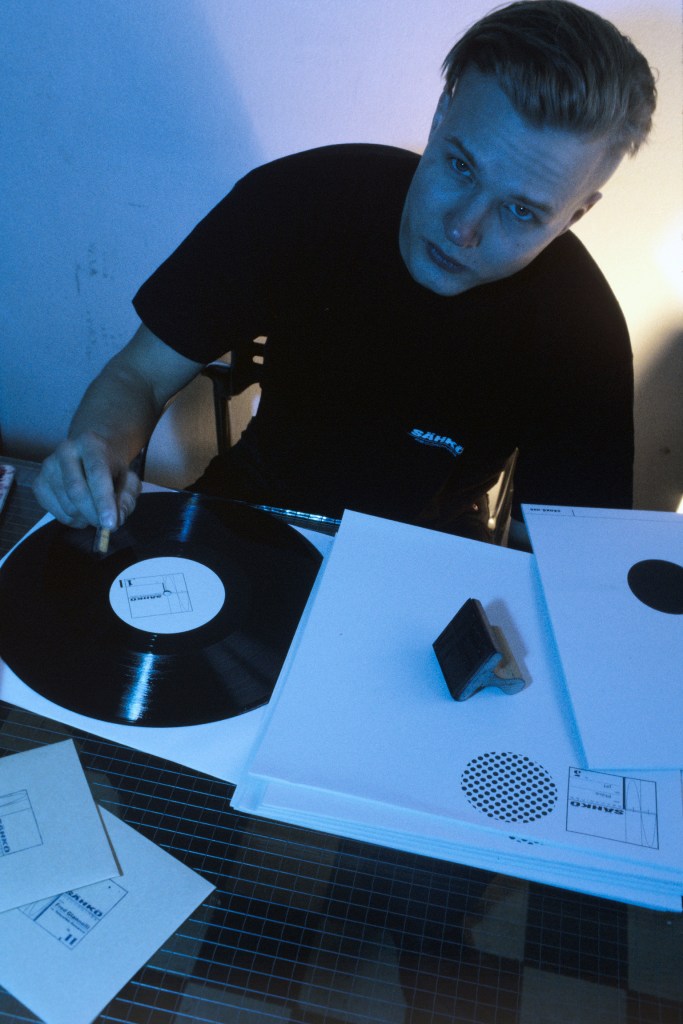
The Sähkö Recordings boss at work

I’m curious how you first came upon No-Man and in particular the Heaven Taste track.

I heard the track first time when someone played it on a DJ-set.

What about the track captured your attention?

The track has a wonderful Ibiza-morning feeling, laid back rhythms combined with some progressive melodies.
I really regard it as a masterpiece.

Were you familiar with the work JBK (Steve Jansen, Richard Barbieri and Mick Karn) before-hand?

Yes I have a lots of records where they appear in different roles.

Did you have any difficulties securing the rights to reissue the track?

No it was very easy. I just sent a mail to Steven Wilson and he said yes immediately.

What is the origin of the cover art on the release?

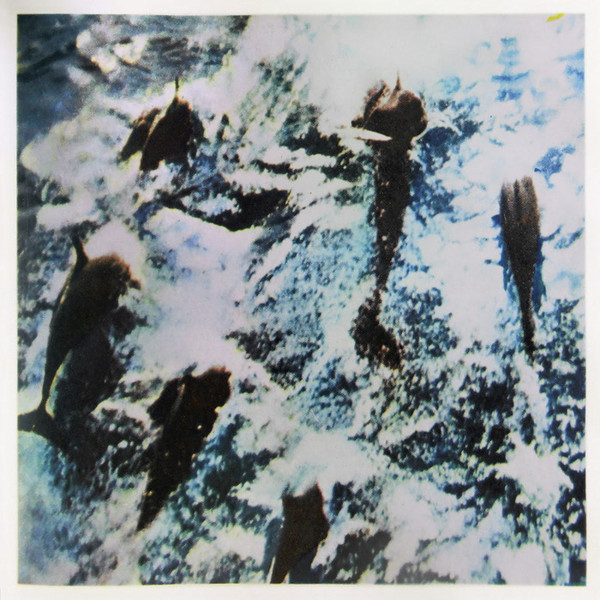
The image is from some old book found by Jimi Tenor.
Also the label arts are from there, The elements are newly composed on both.

Does the label have any plans to release other No-Man material or the full version of Heaven Taste?

I don’t think so.
The idea was to make a nice 12″ of the track suitable for DJ-use.
I have a long DJ background

Cover of the 2016 Sähkö Recordings release of Heaven Taste