Originally serving as Henry Fool’s keyboardist, Stephen Bennett soon became a key collaborator on Tim’s various solo albums, as well as serving as a member of the No-Man live band in 2008 and 2012.
How did you first hear about No-Man and how did you get involved with the making of Together We’re Stranger?
I come from the North West of England like Tim and I’d heard one of his early bands on Radio Piccadilly in Manchester, while he knew me through my involvement with the NeoProg band LaHost and my music technology writing. I’d also bought some No-Man records, so I was familiar with their work, and I vaguely recall that Steven was around at the Marquee club in London when I spent a lot of time gigging and ligging there in the ‘80s. Tim played in Norwich with Samuel Smiles and a friend, Richard Fryer, mentioned he had actually moved to Norwich so he set up a meeting. Tim and I got on really well straight away as we have much in common, with similar backgrounds and artistic likes and influences. As for working with No-Man, Tim is incredibly generous — he’s always creating opportunities for his friends to shine, so it was inevitable I ended up working with them.
How did you make the noise that opens the title track of Together We’re Stranger?
I was living in Sweden at the time, so it probably involved either Moose mating calls or some experimental synthesizer I was reviewing. All I know is that it’s probably the most hated moment on any No-Man album. Perhaps, the most hated moment on any album ever released.
What was the impetus to start Henry Fool?
Richard Fryer proved to be a perceptive individual as he accurately predicted our shared interests and Tim and I quickly delved into passionate discussions about jazz and progressive rock. Surprisingly, we discovered that we had come close to crossing paths on several occasions at various music industry gatherings. We began entertaining some rather outlandish ideas for a ‘fantasy’ concept album based on the novel Stig of the Dump. However, our enthusiasm quickly waned when the author of said book, Clive King, happened to sit down at a nearby table. We took this unexpected encounter as a sign, but we departed with a determination to collaborate in some way. A few months later, Tim and I found ourselves at Paul Wright’s Music Farm studios in Norfolk as Tim and I insisted that a substantial portion of the album be recorded live as a band. Thus, Henry Fool was born, and our collaboration began. I hope we do make another Fool album as we do have a lot to say still in this jazz/prog format. Henry Fool was also my first collaboration with Steven who mixed a couple of tracks alongside my mixes.
Stephen and Tim during their time as part of Henry Fool
How would you say Tim has evolved as a songwriter over the years of your collaboration?
I think he’s technically more confident now, which has allowed him to experiment more. Tim is a restless creator, always exploring new ways of making music and expressing himself. He chooses his collaborators well—I mean, look at some of the amazing people he’s worked with on his albums!
Tim has said that he was disappointed with his first solo album, My Hotel Year. Is that a sentiment that you share?
I never really liked the ‘cold’ and sparse sound of the mixes—but the songs and performances are great. David Picking, who mixed it and plays drums and other stuff, is an amazing musician and technologist and he did a fantastic job. I think the album is pretty unique sonically and musically. I tend to like the warm and overblown, so it was never going to sound right to me, but it’s still an amazing album. I thought the songs I co-wrote with Tim are pretty good, especially Sleepwalker and working with David Torn, Hugh Hopper, Peter Chilvers, the Enos and David was a brilliant experience.
What were the rehearsals like for the 2008 No-Man tour?
Imagine the most fun you’ve had and double it! Steven was away for the first few rehearsals, so the rest of us set up at a room in Cambridge—we sounded pretty good straight away I thought. Then Steven arrived with a pedal board the size of a bus! As soon as he hit a chord, it just took the music and performance to another level. I was using an early version of Apple’s Mainstage and planned to take that on tour with a Mac and a master keyboard—I like to travel light, though my studio is packed with vintage gear. All the way through rehearsals, my Mac kept crashing and Tim and Steven were starting to look nervous. I, of course, boasted that it’d be ‘alright on the night’, but the band were doubtful. As it turned out, my computer was probably the only thing that didn’t break on the tour. As for the tour itself, it was brilliant. The band were all similar in our tastes and lifestyles and most of us spent the time arguing about important stuff like which was the worst Mike Oldfield album or if any of the post-Duke Genesis albums were any good. Think Tim and Steven’s podcast, but with a whole band arguing instead. I just wish we’d recorded the last gig rather than the first for Love and Endings though, as we were, if you’ll pardon my French, shit hot by then.
How would you say the live band has evolved between the short 2008 tour and the longer 2012 tour?
When you play together a lot, a kind of telepathy develops between the musicians. You can relax and take the music into new areas and take chances you might not at first. Working with brilliant musicians is one of the best experiences you can have, and Tim and Steven both really encourage you to push the envelope of your creativity.
No-Man in full fury during the 2012 tour
How would you say the arrangements of tracks differed from the studio to live performances when it comes to your role as keyboardist?
I’m a great believer in not just replicating the recordings live, though I know that fans often are disappointed by this. Inevitably, it was louder and rockier than the albums. I play less stuff live as well, as I want to have some fun on stage, not just be concentrating on pressing buttons or doing anything particularly technical. So, the arrangements tend to be sparser yet more powerful than any recordings.
Can you shed any light on the aborted 2012 No-Man album? How much of Abandoned Dancehall Dreams was originally supposed to be for that album?
I’m not totally sure, but Steven was encouraging Tim to continue to develop his own oeuvre at that time. And Steven was really busy on his solo work, of course.
You and Tim haven’t co-written together since 2017’s Lost in the Ghost Light. Why did you two stop writing together, and might we see the two of you collaborate again in the future?
My son, Dexter, was born in that year so I took a hiatus from gigging and Tim’s moves to the west country meant we don’t meet up as much as we used to. And there was the pandemic of course! Tim and I also took the opportunity after four albums together to pursue different musical avenues and to work with other people. He did ask if wanted to do some work on Love you to Bits, but I decided that it really didn’t need my input—sometimes doing nothing is the best artistic choice. I’ve also been busy, working with members of White Willow, Airbag, Änglagård and Rain (Jacob Holm-Lupo and Ketil Vestrum Einarsen, Björn Riis and Mattias Olsson—with John Jowett (IQ, Arena, Tim’s band) and Myke Clifford from Henry Fool) in the Anglo/Scandinavian band Galasphere 347—our second album is due out in 2023—and I’m recording an album that might finally satiate my love of the ‘70s and ‘80s British Jazz scene, with Theo Travis on sax, Mattias on drums, John Jowett on bass, and the fantastic Nick Fletcher from the John Hackett band on guitar. I also get to write for a brass section, which I’ve been meaning to do most of my professional life! Tim and I speak on a regular basis and I’m sure we’ll work together again soon—I just need to get around to sending him some ideas!
A well-renowned session player with credits including Radiohead, Blur, and Nick Cave, Ben Castle contributed his distinctive clarinet sounds to the sonic world of Together We’re Stranger.
How did you first hear about No-Man? I heard of No-Man through Steven. I was a big fan of the projects I’d heard of his and was obsessed with Anja Garbarek’s Smiling & Waving album, that he produced. When I did a collaboration album with Marillion Drummer Ian Mosley in 2001, we were wondering who to get to mix it and, having known that Steven had worked with Marillion, I suggested him. I was very excited when he agreed to do it. After that, I got him to mix my 2004 solo album ‘Blah Street’. I remember Steven asking me if I’d play on ’Together We’re Stranger’, whilst he was working on one of those albums, and I recorded my parts in his studio.
What were the sessions like? Were they in person or through digital files?
I remember really enjoying the recording process. I mainly do online sessions for people these days, which is great, but nothing beats the collaboration of being in the same room with others. They had a good idea what they wanted me to play. They knew a lot of the melodies and parts they wanted me to play. We worked out some of the woodwind harmonies together and built up the parts as we went along. They also let me loose with some improvising, particularly on the bass clarinet on Photographs in Black and White.
Considering the rather ambient nature of the instrumentals, what was your approach to “filling the space”
I don’t usually think in terms of filling the space, although I have been known to fill all the spaces! I like to react to what’s going on around me, in an instinctive manner. This is why, the first or second takes are usually the best. When I was improvising, I really wanted to keep the feeling of space and not overplay.
Why use mainly clarinet for the album as opposed to other instruments? Was that your idea or Tim/Steven’s idea?
My friend Theo Travis has being playing with Steven and his various bands and projects for years. He’s a great saxophone and flute player, but luckily for me, I don’t think he plays clarinet, so I got the call to play clarinet and bass clarinet on this. The clarinet and bass clarinet aren’t used as much as saxophone in a pop/rock/prog context, so I think it was to go for the unexpected. I’m not sure who’s idea it was to use them.
Looking back after twenty years, are you surprised about the impact the album has had?
Not at all. I listened to it again recently, and it’s such a great album and timeless. It wasn’t jumping on any fads that would have dated it. It could have been recorded last week or forty years ago.
You worked on Steven’s solo record Grace for Drowning as well as the Storm Corrosion album. Would you say his approach to sessions had changed in the time in-between?
Steven is obviously constantly evolving and moving forward, so his approach to the music is bound to change as he goes along. He always knows what he wants and is very clear in explaining what that is, so from that point of view, things haven’t changed much for me. I have so many great memories of all the recordings I have done with him.
What was it like filming and performing with Radiohead for their 2011 Live from the Basement: The King of Limbs session?
It was a dream. I am a huge fan of theirs. I was playing with Kula Shaker on ’The Other Stage’ at Glastonbury in 1997 at the exact same time as Radiohead’s infamous set. I didn’t know much about Radiohead at that time, but there was such a buzz about them, I was compelled to check out OK Computer and it blew my mind and changed everything for me. Up until that point, I was very focused on playing straight ahead jazz. After immersing myself in their music, I wanted to throw rock and electronica into my musical melting pot. My ‘Blah Street’ album was born out of that. That’s why the jazz purists hated it. Haha! They were all so lovely on the filming day. It was quite surreal to be in the room playing music with them, as I was such a huge fan, but also felt very normal.
You did a few shows with Marillion in addition to contributing to one of their albums (plus Ian Mosley’s solo record). What was your experience with them?
The first vinyl album I ever bought was Misplaced Childhood, and the first gig I ever went to was Marillion at Milton Keynes Bowl in 1986 and I saw them many times before. Again, I was such a huge fan, that it was so surreal to get to actually play with them. I even recognised some of the fans in the audience from all the shows I’d been to. I remember playing with them at the Zodiac in Oxford and hardly being able to play the sax as I was smiling so much. I was thinking about the twelve year old me seeing myself up on stage with his heroes. I played with them last year at their convention and it was every bit the same buzz as it was the first time. I feel so lucky to have been able to play with so many of my heroes.
David Picking contributed various electronics, the mournful trumpet solo on the title track and “All The Blue Changes,” and drumming to No-Man’s 2003 album Together We’re Stranger.
How did you first hear about No-Man and where did your involvement withTogether We’re Strangercome from?
I first became aware of No-Man in 1993 when a friend suggested I should check out their debut album, as he thought it had similarities to musical projects that I had been involved in. I bought the album on cassette and enjoyed it, but didn’t monitor the band closely after that.
My proper connection to No-Man came about in 2001. My friend and Gramophone bandmate Jon Cotton had become friends with Stephen Bennett through an online users’ group for Logic (audio software). I sent Stephen some of the instrumental music that I had recorded under the name Rhinoceros. The next thing I knew, I had a message on my answering machine from Tim, saying that he had heard the music and wondered if I would be interested in releasing it via Burning Shed, which was just getting started. He also mentioned that he had spontaneously written lyrics and recorded a vocal for one of the pieces, which was a surprise! (“Made See-Through,” which was later included on My Hotel Year.)An album of my Rhinoceros work, Tea Chest, was released through Burning Shed in 2001, then Tim asked if I wanted to contribute to Together We’re Stranger.
Was it unusual to be sending files back and forth without meeting face to face with Tim and Steven at all?
It seemed like an unusual way of working at the time, although of course it has since become very common. I am a fairly shy and socially anxious person (and I was much more so at that time), so it worked very well for me, as it meant that I could work on my contributions at my own pace without too much pressure. Steven sent me rough mixes of the songs, which were substantially complete. I then spent several weeks experimenting with different sounds and parts and sent back what I thought were the best ones. I had no idea what would actually be used until I heard the final album several months later. Tim has mentioned in interviews that, despite collaborating on a number of different recordings, he and I have never met in person or spoken on the phone, which is true. That was never really a deliberate plan on my part, but it became a sort of running joke and I was curious to see how far we could carry our working relationship on that basis. Pretty far, as it turned out!
How did you get that mournful trumpet sound on the first two tracks of the album?
Through not being able to play the instrument very well! I didn’t get much direction from Tim and Steven, but one specific exception was that Tim asked me to record some of what he called my ‘asthmatic trumpet’. I am not a trumpet player by any stretch of the imagination, but I had learned the basics on the instrument and managed to get some sort of breathy, quasi-Jon Hassell-like tones out of it which I had used in my own music. I recorded a short section in the transition between the first two songs, as that seemed to be the only place that it could fit, and thought, ‘They won’t use that,’ but… they did. The wisdom of that decision is still questionable in my opinion, but hopefully it works in context.
How much of the spacey electronics and mellotron we hear on the first four tracks is you and how much is Steven’s?
My electronic additions were all subtle, textural sounds; any chordal or melodic parts are Steven’s. The sounds that I added are most noticeable in the transition between “All the Blue Changes” and “The City in a Hundred Ways,” and at the end of “Things I Want to Tell You.“
The reissue of Together We’re Stranger included an alternate “drum-mix” of “The Break-Up for Real.” Do you remember anything on why Tim and Steven decided to go with the other, drum-less, version?
Tim indicated at the outset that because the album was going to be quite ambient and minimalistic, it probably wouldn’t call for full-on drum kit parts, but I recorded a simple part for “The Break-Up For Real” (used for the alternate mix) and also a snare drum part for “Photographs in Black and White.” I think that both were rejected because having no drums brought a certain cohesiveness to the overall flow of the album, and it would have been too jarring to break with that on only one or two songs.
Have you remained in contact with Tim and Steven in the years following the release of the album?
I never had much close contact with Steven, although he asked me to remix a Bass Communion track which was included on the Reconstructions and Recycling album; we had no great reason to remain in touch after that. Tim and I remained in more active contact and we worked together on my second Rhinoceros album and of course My Hotel Year. In more recent years, we lost touch, partly because I no longer live in the UK, and also because I have stopped making music in a professional capacity.
Reflect on your involvement with Tim’s 2004 album “My Hotel Year”
In all honesty, I look back on that album with a certain ambivalence, as I know Tim does himself. I think that it was misrepresented as a Tim solo album, which may have led people to expect something very unified in approach, whereas in reality it was a collection of diverse collaborations with several different people, without a strong connecting thread. In mixing the album, I think I did a decent job in trying to bring a cohesive sound to the material, but it ultimately betrayed its fragmented origins, and maybe that’s why some people found it unsatisfying. Still, over the years I’ve heard people praise certain songs, and it’s gratifying to know that it did have a positive impact on some listeners, even if it remains, as Tim called it, his ‘least loved album’.
Markus Reuter is a German touch guitarist. A student of Robert Fripp’s Guitar Circle, Markus made a name for himself because of his unique approach to composition and his quite fearsome abilities with the touch guitar and on bass. Markus is also a producer and instrument designer, having worked on creating his own line of touch guitars. As a member of the improvised music group centrozoon, Markus has collaborated on 3 releases with Tim Bowness. This piece is being published in conjunction with my new website Words On Tape
What exactly are the origins of centrozoon and why did you decide to make a group centered around improvised pieces of music? Improvised music has, my interest since the early nineties. In around 1996 I met Bernhard Wöstheinrich. He had the band centrozoon before me with some other guys. It just a trio for a while with a guy called Thorsten Niestrath. He left, so it just left Bernhard and me. We had so much fun together playing together and we lived relatively close from each other, like a 20 minute train ride, so we met once per week to play together for years. It just was just something we enjoyed, you know, I was sort of like our hobby, even though we played a few gigs, even from the very beginning that we got together. Bernhard didn’t go to music school, he didn’t know anything about theory, but what he did was like completely free. I had been classically trained so it was super inspiring to me to work with somebody who was so free and almost used the synthesizers and sequencers like paint on a canvas. It was a perfect match. It’s difficult to find a partner in life, but finding a musical partner is even harder in a way. I got so lucky in my life to have met quite a few people where it really clicked. I still see Bernhard almost every day, even though we don’t play together much anymore. We play maybe once or twice a year, but that’s about it at the moment.
How did Tim Bowness get involved with centrozoon? What exactly did his collaboration entail? I had met Tim online on a mailing list, I think in the late nineties or around 2000 or 2001. I ended up visiting him in Norwich, where he used to live back then. We spent a couple days together, walking through the city, talking about and listening to music and we became friends. I came back to Germany and I said to Bernhard, ‘let’s, let’s just invite him and see what happens.’ We got together and we had a friend there, Philipp Quaet-Faslem, who was recording us. It was like the old days where we didn’t have money for good equipment. It was all very basic in regards to technology, but it was an inspired session. All the music that Tim, Bernhard and I created together was created in about 24 to 30 hours or something like that. What was so amazing, and I’ve only ever experienced that once again in my career, but only once, is that Tim actually had these lyrical ideas. They were just individual words and some phrases that he was improvising, but he was coming up with the lyrics and the melodies as we were playing the pieces together. We gave Bernhard maybe 10 to 15 minutes before each recording session to prepare something in his groove box, which was something we used before the days of using laptops. So he’d prepared something, which was just like two bar based pattern, maybe with some chords or like some percussive elements, and that was always the starting point for the improvisations. The riffs, the melodies, and all the, the harmonic content came together in the improvisation. We were so impressed with Tim’s ability to improvise on that level of lyrics. He came up with these strong phases like in “10 Versions of America.” It was so powerful and all improvised.
Never Trust The Way You Are had some delays, as it was supposed to come out in 2005. It was the first time we had real production. Before that we just recorded live to two track. It was the start of a very long but good learning curve for me. We actually found a label that wanted to put it out. The label actually went bust the moment the order was placed at the pressing plant. We had around 5000 copies that we had bought from the pressing plant, meaning that there are actual CD’s of the album out there! We just couldn’t let that be destroyed. We also played some shows in Germany that were semi-improvised. We had the basic drum patterns for the songs, but the rest was largely improvised.
How did you get involved with Tim’s 2004 album My Hotel Year? There are two pieces on that album I was involved with. ”The Me I Know” is a piece that we had written and played as centrozoon and it was sort of his ‘cover version’ on the album. It was not on the centrozoon album Never Trust The Way You Are but was on the EP The Scene of Crash and Burn. We contributed it to his solo album. I had also started writing pieces with Ian Body called Pure. I think I did maybe 20 demos? 10 of them ended up on Pure. Some of the others ended up on an album I did with Pat Mastelotto under the name Tuner called Totem. So this one leftover piece, “I Once Loved You,” ended up on Tim’s album.
Where does your involvement with Stick Men come from?
In 2005 Pat called me and basically said “Markus, I have the time, I have the protools set up, let’s make a record!” I felt I was interning while we were working on music together. I spent a good five years with him just learning in the studio. While I was at Pat’s house working on the Tuner record Totem, Tony Levin had started work on a solo album called Stick Man. He had asked Pat to be the drummer for that record. Then they started this trio with Michael Bernier. I remember I was there at the moment that Pat received the files from Tony and started adding his drums to it. I was kind of there at the beginning of the band but I wasn’t in the band.
Michael had been chosen by Tony because he was local and all, but Pat told me later that he would have liked to have me in the band from the very beginning. I remember saying to Pat around 2009 or so that it would be great if I toured more. And about 9 months later, he emailed me asking if I’d like to join Stick Men. I told him that I’d have to sleep on it, which some people would say is crazy. I needed to kind of understand what my could my role be in the band. Our first rehearsals together weren’t actually rehearsals but writing sessions. I think on the very first day we wrote the piece Crack in the Sky together. It was quite clear from the beginning that it was a good fit.
On the road with Stick Men. Photo by Tony Levin
What challenges do adding additional members to Stick Men’s live shows (such as David Cross and Mel Collins) bring? Since Tony and Pat are the rhythm section, nothing much changes really. They just play the the same thing they play. So its about me kind of organizing how to share certain melodies or to decide which solo sports are going to be given to the guests. With both David and Mel it was super intuitive and easy. It was especially so with David since we played so many shows with him. We also did a full South American tour with him. In a way it was almost like it was completing the band. With a trio, it’s pretty hard to pull off a full sound like we do with Stick Men. Having David there means I can do much more. Within a 20 minute stretch of a show, I don’t have a single second to take my fingers off of the instrument or touch the fader on my monitor mix. As the lead guitar and soundscaper, I’m busy all of the time. Having David there let me have these moments where I could have a breather or play something more detailed.
What made you seek out the teaching of Robert Fripp and Guitar Circle?
I was 18 when I cam across King Crimson, so I was pretty late to the party. I had fallen in love with Discipline in 1990. I heard “Elephant Talk” and knew this is the kind of music that I was imagining and here’s the band that was doing it. I knew about Robert because he played on the record. I found in a local music magazine an ad for a concert by Robert and the league of crafty guitarists. It was a great show. There were flyers on the table there for Guitar Craft courses that was happening in the summer of 1991 in Switzerland. For some reason I managed to convince my parents to pay for the course for me and to get a guitar. It wasn’t so much of Robert’s reputation but the music of King Crimson that drew me in. I knew that there was something and here and worth studying for me. Once I was there, I realized that for a lot of people, he was some sort of guru figure. For me, he was one of the greatest teaches I’ve ever met. He was so good, I didn’t need many meetings with him. He managed to pass on the knowledge in a very short period of time.
You were involved with a very unusual improv based album featuring Toyah Wilcox. Reflect on that. The session was set up by the Humans and Tuner. At that point the Humans where Chris Wong, Bill Reiflin and Toyah. A friend of ours who was the ambassador of Estonia organized the Fragile Moments project. It was based off of this Estonian project called Fragile which was Robert Jürjendal and Arvo Urb. These two guys would play together and improvise together The idea was to bring Toyah, Chris and me in. All of the music you hear on that album was played exactly like that in the studio. As far as I remember, there were no overdubs. It was one of the first albums that I mixed and produced. We were all in the same room, even the drums and vocals. My friend Lee Fletcher helped me with the vocal production, Lee was also part of the albums with Tim.
Markus with his U8 Touch Guitar
What made you want to design your own series of Touch Guitars? I realized that I had accumulated so much knowledge about the playing technique, that it was becoming interesting to see if an instrument was actually built from the perspective of a person who knows how to play it. Some of the design features of the other instruments that were around back then were designed by people who are not really players. I had a meeting with Robert Fripp at a festival in Portugal. He asked me, ‘Markus, how are you making a living as a musician? You’re one of the few students who is a lifer.’ During the conversation, I could feel something forming in the back of my head, which was this realization that I had only been creating idealistic pieces of art. So not something that was physical in the sense of more like a CD. I also remember at that point thinking if I can show my parents a guitar, finally they will know what I do. I was lucky to meet a great luthier who I spent time with and built the first 10 instruments with. The prototype instrument was such a revelation. Its actually the instrument on the Fragile Moments record. It changed my whole life because everything went from a being a little bit of a struggle to something joyful. The touch guitar company has existed for 14 years. I gave the license away to some other guy and I’m not involved anymore. I didn’t want to be involved with the organizational aspect of it.
What was it like working with Steven Wilson on Grace for Drowning? Steven had asked Pat to do some remixes of his album Insurgentes. I had developed this strange editing process that Pat then asked me to apply to the material. I had come up with a system to do these metric modulations but based on the original recordings. It was involving some math like stretching seven notes into the space of eight. I remember that I did play on quite a few parts on those remixes. So when Steven asked Pat to play on Grace for Drowning, he must have also asked me to play on something too.
What caused you to decide to start your own podcast series? It was sort of an unintended response to COVID times. In January I wanted to start this new series of doing public touch guitar lessons with my friend. Sean Crowder, whose a drummer. He wanted to show people that you could learn this instrument in a year. We are still doing documentary style videos that are on YouTube. I had a 45 minute conversation with Sean back in November. I said to myself, ‘Okay, why don’t I just put this out as a sort of podcast, an open conversation about whatever topics come up. That was the beginning of it. I think the second episode was with Sid Smith, so a wonderful conversation. At that point I started recording one conversation a week. That become two and then three. I’ve recorded maybe 65 of them, with 52 or 53 having been released. Some of my partners in these conversations have said that its almost like doing therapy.
Why do you think the music of King Crimson has this impact on people and continues to be an influence all these years later? Because of the compositions is my answer. As far as I’m concerned, there is something unique about the way they have these distinct phases and lineups. There’s also looking another way there’s different kinds of writing. You can find these very particular, almost closed, systems within how the band operated. I don’t know if anyone would agree with me, but King Crimson is sort of like the Beatles in popular culture. Nobody really calls that out but its true.
Bill Smith has been creating album covers since 1978. As the founder of the titular studio, he has played a role in such works as the cover of Kate Bush – Hounds of Love, Marillion – Brave and No-Man’s own Flowermouth.
Bill was kind enough to send me some reflections of his work with the band.
Bill Smith Studio started working with Tim and No-Man in 1994 when they were signed to One Little Indian Records – a great independent label that knew a lot about music and design Paul White who ran OLI worked with amazing artists like Bjork and used really good design agencies like me company. So, BSS was lucky that Tim found us.
Album cover design is a collaborative process and as Art Director and Studio owner, I had some fantastic designers who worked for me and some great photographers who worked closely with us on most projects. When a new job came in we would discuss titles, quite often I would listen to demos or some of the recordings to get a feel for the music. Within the studio we would then talk ideas and put some visuals together. It’s what we did for every artist/band we worked with. Ideas are the life blood of the creative process, and I don’t mind who comes up with an idea, as long as it’s good. No one person can ever claim the whole idea, a finished cover is a collaboration between artist/band, designer and photographer.
I got into sleeve design because I loved music (and still do), music of all styles. Music moves me much more than money, when an artist has put everything into creating a set of music, I think it both a privilege and a duty to create the best possible cover I can for them, regardless of how much money is involved. I also worked with some great photographers and illustrators who thought the same as me and would give generously of their time and creativity, not least the Douglas Brothers. We’d been working together since 1979/80 on artists like the Jam, Toyah Willcox, Thomas Dolby and King Crimson. Andrew Douglas would often take the kernel of an idea and add to it, bringing something new into the mix, always making the original idea better. I was always keen to get Andrew involved.
At the time of no-man, Andrew and I both loved the work of Guy Bourdin, a French fashion photographer of some repute, whose work featured regularly in photo magazines like Zoom, still a great magazine and one I subscribed to in the 70’s and 80’s. I used my son Will who was 12 at the time (a regular model, Will featured on may BSS covers, through the 80’s and 90’s).
I imagined all this flowery music coming out of the head of the artist. We wanted something painterly, but disturbing, something ‘hidden’ from the viewer, that would be revealed with the music and I remembered Renaissance flower paintings which had philosophical and obscure symbolism, each different flower with a different meaning. The work of Fantin-Latour had been used on the front of Power, Corruption and Lies for New Order in 1983 by Peter Saville. I wanted a photographic interpretation.
We used some ‘outtakes’ from the Flowermouth session for the cover images on Flowermix album, Carl Glover had played a little with no-man logotype and the font was used throughout the packaging.
The subsequent two releases Wild Opera and Dry Cleaning Ray were put together using ‘found’ photographs, Wild Opera had a very Fifties feel with the family holiday snapshot, and Dry Cleaning Ray the shop front of a dry cleaners. These images are much more ‘laid back’ than Flowermouth, maybe wore worldy-wise and bit more grown up, bit more self-absorbed, none the less striking.
Flowermouth Sleeve by Bill Smith with photography by Andrew Douglas
A collection of Bill Smith Studios finest works is now out and available to purchase under the name Cover Stories: 5 Decades of Album Art
Steven Wilson is a man who needs little introduction in the world of No-Man. Producer, singer, songwriter and multi-instrumentalist, his list of projects and releases both under his own name and with the various bands he’s been a part of run the sonic gamut from ambient drone to art pop to progressive rock.
Steven was kind enough to take time out of his busy schedule for a live interview regarding the history of No-Man from his perspective.
What were your first impressions upon meeting Tim Bowness and how do you think he’s evolved as a songwriter?
Oh, wow, that’s a long time ago, isn’t it? So I first met him in 1987. He was and is three years older than me. And when you’re 19 years old, as I was when I met him, that is a big thing. He’d read more books than me. He’d heard more music than I had. He became a little bit of a mentor, introducing me particularly to a lot of music that became very important to me. So I definitely was very impressed with his knowledge, how articulate he was, his intellect. All of those things were very inspiring. But above all, I think the thing that we bonded over the most was this kind of open minded curiosity that we both shared. In the sense that nothing was out of bounds when we when we first started making music, as I’m sure you’ve heard the story before, the first session we did together, which wasn’t the first time we met, it was the second time we met. But the first session we did together, we produced in the space of two hours a sort of fairly pompous piece of ambient progressive pop, a three minute slice of industrial funk and a kind of gothic ballad. It was almost like these were all things that we could we were equally enthused about.
I’d never met anyone like that before who kind of shared my curiosity for the magic of music wherever it lay. There were no parameters. There was no idea of limitations in this. Still not when we work together. Which, of course, is a very uncommercial perspective to having them in the music industry. Music industry expects you to find a formula and stick to it. And I think that’s why I myself and Tim in a sense stood out in the industry a little bit, for better or worse.
How much of an influence would you say Tim has been on your own journey as a songwriter?
When I first met him, I wasn’t really a lyric writer. I wasn’t interested in writing lyrics, but I definitely was very impressed with his lyrics, his sense of poetry, his sense of prose and the way he would draw on the worlds of literature, cinema, life experience and sometimes trivialities to become fundamental to a song. I think some of those early No-Man song titles came from conversations, sometimes quite trivial things Tim would latch onto and it would become a song, a crystallized moment if you like, in everyday life that somehow reflected back at you something profound and that something I was getting this also from reading at the time and also cinema. Tim definitely had that down, that kind of approach to to songwriting and lyric writing and made me aspiring in a way to be a lyric writer and to be a better lyric writer.
One thing I found in my research were three releases that were called Strip Wild, Death and Dodgson’s Dreamchild and Prattle. Can you shed some light on these?
I think I don’t think any of them came out. They were probably just all titles for things that we planned to do. Tim was always coming up with titles, as it’s part of his job. I would probably latch onto a title and say, “Yeah, that’s going to be we’ll do an EP, you know, and we’ll put this song on.” Then we would probably fail to get a record deal, so we never managed to put it together or release it. They were probably they were just all working titles for EPs or combinations of songs.
How do you look back on those first two No-man albums, along with singles and all the events surrounding them. Do you think they were successful albums in your eyes?
I’ve gone back and remastered them recently for this prospective box set, and I have to say I was pleasantly surprised. Time is a great healer and distance gives you a more fond perspective of things. I found this with a lot of things in my life, things that I was kind of embarrassed about at the time. I can now listen to it as something that was almost made by someone else. I can appreciate it. There were songs that I just didn’t remember at all and when I was relistening to them I thought, “This is really good.”While there are some pieces I still cringe a little bit at, I would say 80 percent of it sounds really good to me.What I realize now is how alien we must have sounded in the contemporary music scene at the time. The funny thing is we felt like we were part of what was going on, but now I realize we were a million miles away. It was in a good way but in way that perhaps made it hard for us at that time.
I think songs like “Days In The Trees” and “Sweetheart Raw” on the surface have the elements of what was going on, such as the use of beats and a sort of dance rhythm, but everything else about it is completely different. It’s unashamedly romantic, unashamedly lush, unashamedly ambitious, epic and textural. It also doesn’t have the archness that I think a lot of the other sort of electronic pop crossover music had around that time. We were closer to the Pet Shop Boys than we were to The Happy Monday in that respect. I can appreciate now how different we were and how the sound is very unique, largely because of Tim’s voice. There’s also the violin, which is a unique element to the musical vocabulary. Some of the production and the sounds are a bit primitive but even that in a way gives it a charm that I couldn’t have appreciated at that time.
They’re almost, in a way, the future echo of what was to come with the idea of combining very epic textual balladeeringwith electronic sounds and a nostalgic, almost literary quality to the lyrics. That would would eventually become the blueprints for what was to come on later albums like Together We’re Stranger and Returning Jesus.
How much say did you and Tim have in the regards to the choice of singles and direction of music videos?
Well, I’d love to tell you we didn’t have any, but we did. We had a lot of control. We wanted to get a foothold in the industry such that we could continue to do this for the rest of our lives to make pop music and get paid for it. And to do that, realistically speaking, you need to have a breakthrough of some kind. The first couple of singles got phenomenal press, but didn’t really sell. We were persuaded, very easily I might add, that we needed something more radio friendly.So we set about writings songs to order. I have to say, its the only time in my life I’ve ever done it. I only did it for about 18 months. I learned from my mistakes and have never done it again because it didn’t work. There’s nothing worse than failing on someone else’s term.
Can you talk a bit about the “Only Baby” music video?
It’s awful isn’t it. It’s probably the only time we’ve ever spent a lot of money on a video. I think we did the “Colours” video for five hundred quid but “Only Baby” was something like ten grand or so spent on it. I think “Only Baby” was a great pop single, notwithstanding the terrible video. I don’t feel any mistakes were made in the choice of single, but the video was horrendous.
Steven during the filming of the “Only Baby” promotional video
Several No-Man tracks seem to reuse elements or chord progressions that show up elsewhere in your work. For example, the sampled flute from “A Plague of Lighthouse Keepers” is on both “Voyage 34” and “Sweetheart Raw.” Do you find yourself reusing elements from previous songs a lot?
Nowadays, not so much, but at the time I was basically making music almost all the time without necessarily thinking about who it would be right for. I would sometimes write something for Porcupine Tree and think to myself, “Oh, I wonder if Tim could come up for some lyrics for this.” I’d send him the backing track and then he would come along and we’d rework it as a No-Man song. The best example of this is with “Days in the Trees,“ which started out as a Porcupine Tree instrumental called “Mute.” I sent it to Tim and he wrote lyrics and a melody for it. I saw no reason to not release both versions. In a way I kind of like the conceptual continuity across my career. Another example of that would be the Bass Communion song “Drugged,”which became the basis for the first part of “Together We’re Stranger.” Those things are like little Easter eggs for people to discover.
What did you look for in the samples you used in the early No-Man and Porcupine Tree tracks?
Well, different reasons depending on what sample. I would have used them because I didn’t have access to a real flute player or access to Lisa Gerrard. It was kind of like trying to expand the musical palette by sampling. In that time, we’re about this in the golden age of sampling. Everyone was doing it from The Beastie Boys to DJ Shadow to De La Soul. I was listening to a lot of those records as well, records that are almost entirely made up of sampling or turntablism. We’d go crate digging and find these great grooves from 70’s soul and funk records. It was being a bit of a magpie in that sense, finding things that I could write music over the top of because I wasn’t a drummer, I didn’t have a drummer to work with, and yet I love good grooves.
I’d grown up with with great disco, funk and groove records, so I wanted to work with great grooves. Tim and I were massively inspired by Massive Attack at the time. A lot of their basic rhythm tracks were created by sampling, like famously sampling the Billy Cobham loop on “Safe from Harm.” We were kind of tapping into that aesthetic, the idea of doing some writing, finding some great grooves and writing our own song over the top. Others samples were just because I didn’t have access to the sort of musical colors that I wanted to have access to. Since I didn’t know anyone that played the flute or I didn’t know any female singers, I ended up sampling them instead.
Was it difficult to bring the material to the stage when you were performing as a trio?
It was really hard. I hated playing live for many years. Part of it was the struggle in trying to bring what were quite layered, complex productions into the kind of brutal environment of a live setting. The kind of places we were playing in those early days, places like small clubs and pubs, you can’t get across subtlety. It would have been like trying to play “Count of Unease” in a pub. It’s just the wrong context for material like that. I think we ended up just turning the volume up and relying more on the aspects of our sound that were a bit more rock orientated but were less interesting to us. Tim would always sing louder and almost over sing. It took me a long time to recover.
What’s the backstory behind “Heaven Taste?” How did it evolve into the 21 minute piece that was released as the B-side to “Painting Paradise?“
If I remember correctly, it was an ambient instrumental that I created for what I suppose might have been a really early incarnation of Bass Communion. I remember doing a lot of ambient instrumentals in the early 90’s with the idea that I was going to do a side project. I can’t remember whose idea it was to get JBK to work on it. The original instrumental was about 12 minutes long. The full 21 minute version was constructed by piecing together three alternate mixes of the same track. The piece in the middle with the hand percussion for example, that was originally buried under the main body of the track. I soloed it a created a kind of percussion based remix and edited that into the middle of the track. I kept doing these different mixes and eventually I had three mixes that I really liked. I edited the three mixes together to create the full 21 minute version
Between Tim’s own “Hard Drive of Doom” and your tape collection how much is left in the collective No-Man vault in regards to unreleased tracks?
I remember compiling two volumes of lost tracks. Just looking at the DAT tapes from 1990 to 1992 that I have here, there’s quite a lot of stuff. I don’t recognize some of these titles, which means they might be early versions of things that were released. Maybe some of these are just instrumentals that never got vocals added to them. I’d say there’s probably a good couple of CDs worth of unreleased songs.
What lessons did you learn from the early No-Man live shows that you took with you when you came time for Porcupine Tree to do its first few tours?
I don’t think it did. I think Porcupine Tree was such a different proposition right from the beginning. I mean, it was a rock band. No-Man hadn’t really worked the way we had wanted when we tried to do it live. Porcupine Tree was, at the end of the day, a conventional four piece rock band. There weren’t that many backing tracks. It was just four guys playing live together.
Porcupine Tree on the road in the mid 90’s.
What was it like having Robert Fripp in your home studio to work on Flowermouth?
It was amazing! I remember being a bit embarrassed that he was sitting in my little bedroom studio with his big rig and his assistant sitting there, but he was lovely. Robert’s whole thing was just purely intuitive. He didn’t want to hear the song before. He said, “Just don’t play me the song, just roll tape” and he just would produce music. And of course, it was a real buzz for myself and Tim. He was probably the first musician that I think we met that we could honestly say we’d grown up listening to what they did. I think he stamped an incredible kind of signature on the album. Everything he did on that was recorded in a very short period of time, about a day or two. It was inspiring.
What’s your side of the story in regards to the departure of Ben Coleman?
I’m sure everyone’s memory is different. I think there were two things that would have contributed to myself and Tim kind of going it alone at that time. The first thing was, from my own personal perspective, I just didn’t want violin on every single song. This is part of the problem with having such a distinctive soloist like Ben. He’s an amazing musician, by far superior to myself and Tim in terms of musicianship. I was, however, becoming frustrated trying to integrate violin into every song. I didn’t want a violin solo on every song. I wanted to hear flute, saxophone or other sort of musical textures and other colours. You can begin to hear those on Flowermouth with the trumpets, the saxophones and the flutes. Ben was becoming frustrated because I was saying “You know what? I don’t want the violin, I want flute on this track” and, quite rightfully so, him saying, “Now hold on. I’m in this band, and I’m the soloist in this band. Why are we getting a flute player?” I just wanted to hear different musical forces that add different things to the musical vocabulary.
The second thing is that the band had not been successful. Let’s address the elephant in the room here. The first album had not been successful. We were struggling financially. I think we were offered by One Little Indian for Flowermouth a reduced advance, so we couldn’t sustain the band as a three piece anymore. That’s the brutal reality of it. We could not sustain the band as a three piece financially anymore, particularly having a member that didn’t contribute to the writing and was essentially a solo voice. I think those two things conspired in a way to unfortunately sideline Ben, as he had never been part of the connection between myself and Tim.
Why did you bring Ben back for the Porcupine Tree track “What Happens Now?” and the first show of the 2008 tour?
Well, the simple reason is he’s amazing. He’s an amazing soloist and if you’ve got a song where you think to yourself, “Wow, you know what this track needs? A scorching violin solo!” there’s no one else I would call. I’d say he’s probably the best rock violin solo player I’ve ever come across. Even though I didn’t want violin on every single song, there are times where I thought to myself, “That’s exactly what I need!” and Ben would be the person I’d call. He’s actually done a session for me quite recently for a new song.
Steven, Tim and Ben pose for a photo for Home and Studio magazine
What prompted you and Tim to do the hour long sessions of writing, recording and finishing a song that you two did for Wild Opera and Dry Cleaning Ray?
It was to change it up. The one thing that almost always works for me is to create a sense of limitations to function within and see how it affects what you do. It also was kind of a way to get our writing process kickstarted. The idea was we’re going to spend an hour on a piece of music. If it’s not working, we would just move on and start again on something fresh. It inspired us to think about music in a very fast and intuitive way. And it worked! We produced something like 20 or 30 pieces in two or three sessions. They became the foundations for the Wild Opera album, an album that we are still very proud of. I’ve done the same thing on THE FUTURE BITES, getting out of my comfort zone by putting the guitar down and saying, “I’m not going to work on the guitar, I’m going to work on the keyboards.” So things like that definitely revitalize and decontextualize the way you think about music and the way you create music.
Why was “Lighthouse” revisited for Returning Jesus after having first demoed the track in 1994?
I don’t think we revisited it. We had been working on that song relentlessly for about six years by that point Every year we do a different version of it, and I think the previous album Wild Opera had not been the right context for it. By the time we got around to Returning Jesus it felt like it belonged to that musical world. So I don’t think it was a question of revisiting in the same way as Love you to Bits, which is literally a song that we didn’t touch for about 15 years. “Lighthouse,” I think we were always working on it, developing different mixes, different versions, changing the tempo. So it wasn’t a question of revisiting. I think it was just a question of finally saying, it’s done after six years.
Why rerelease Speak in 1999?
We got offered a deal by this Italian label called Materiali Sonorithat we both liked at the time. They asked us if we had anything that they could release. We said, “Well, what if we go back and rework and remix the Speak material?”
What caused the massive change in sound between Wild Opera / Dry-Cleaning Ray and Returning Jesus?
A lot of my career has been about me thinking, “OK, I’ve done that, what can I do next is different.” It’s always been that way with me and it’s the same with Tim. So we might have said, “Well, you know, we’ve done the Wild Opera thing, we’ve done the beats thing, we’ve worked with the rhythms and the industrial rhythms. Let’s go in complete opposite direction now and let’s do something really epic and romantic and texture and orchestrated.” It probably was us just trying to do something that was almost a reaction against what came before.
Together We’re Stranger is considered by many No-Man fans to the your best album. Was there a sense that you were working on something special during its recording?
I have that sense for every record I’ve ever made. Otherwise, I wouldn’t have carried on working on it. It would be a very depressing thought to think you were halfway through something and then start to think to yourself, “You know what? This is really isn’t that special.” I don’t think Together We’re Stranger felt any more special than Returning Jesus or Wild Opera. It’s only in retrospect that albums reveal their true immortality or not.
I would have thought, if anything the “songwriting” was probably more rigorous on Returning Jesus because the first half of Together We’re Stranger is almost like a tone poem. There’s very little in the way of conventional songwriting. I guess it’s one of those times when an album turns out to have a magic about it that you couldn’t really have contrived. It just has a magic. And that’s something that kind of revealed itself over a period of time to both us and the listeners.
Schoolyard Ghosts seems to cover a extremely broad range of sounds. Was it challenging to make that record cohesive and, as you mentioned in the In Absentia documentary, have a sort of cinematic feel with the track listing?
No, because those are the records that I like. Very often the records that I like the most are the records I feel have the most sense of cinematic sweeps. The analogy I’ve always used is when you when you’re watching a piece of cinema, and part of what makes cinema great is the the juxtaposition of mood. So you go from, for example, a scene full of joy and then something tragic happens. The next scene is very melancholic, very depressing and very sad. You don’t often have those kind of mood shifts within pop music. Songs tend to be either happy songs or sad songs. One of the beautiful things you can do across an album is you can almost program it to be like a piece of cinema by juxtaposing those scenes and those different emotions. I love doing that and I think it’s one of the things I’m good at. Schoolyard Ghost would have been another example of taking all those disparate elements and making it hang together in a satisfying way.
What was the process like to arrange the various studio tracks for the live performances when it came time to tour in 2008?Was it a challenge to translate the stuff you guys did in the studio onto the live stage?
I mean, it’s always a challenge. You make a studio record and you don’t set any limitations on your ambitions to overdub and create layers in the production, then suddenly you’re in a live context and you’ve got to somehow recreate that big cathedral of sound with a few live musicians. If I remember rightly we didn’t use backing tracks. It was completely live. It was quite a large band. We had six or seven people, so the possibilities were much greater than they had been, say, back in ’91, ’92, when it was just me, Tim and Ben. Back then Tim was struggling to get those vocal nuances over the sound of a live band.
The No-Man live band in 2008
How did the live band evolve between 2008 and 2012? We had decided to get rid of the electronic drums and have a live drum kit, and that was so much better. Andrew Booker, the drummer, was using electronic bass, using pads and electronic drums which I found a bit unsatisfying. I love to feel having a live drummer behind me. Confidence would have also probably been much more prevalent a second time around. We knew it worked. We knew we could do it. I think the other thing worth mentioning here is it becomes more fun that the kind of careerist aspects were no longer relevant. In the early days, we were very much aware that we were trying to carve out careers for ourselves, trying to become financially stable, trying to convince journalists and trying to make friends and all those things. By the time we get around 2012, 20 years later, we’ve got a fan base. We just got to go out, enjoy it, have fun and know that there are people out there that that have been waiting for us to go out and play that music and the feeling like they’re on our side. That was the thing in the early days, it was always a battle to try and win over the audience.
What does the future have for you and Tim beyond the upcoming box set? Any chance of us getting a new No-Man album anytime soon?
I never rule these things out you know. I always have fun working with Tim. He’s a lot of fun to work with, obviously we have a good rapport and we are never short of ideas when we get together. It’s just a question of time. I don’t have the time to do all the things I would love to do. It’s an unfortunate reality that it kind of always gets pushed down the list of priorities for me, because it is something that is more of a niche these days. I’m also used to being the singer and songwriter in my projects these days. So going back to a scenario where I’m writing with someone else and I’m not the singer is slightly odd for me now, to be honest.
I was also able to ask Steven a few non No-Man related questions
How do you manage to balance your work as a musician, a producer and as a family man?
I think the answer is I don’t, and that’s why I’m doing a bit less than I used to. If you look at my output, say in 2011. I made a solo record, which is a double release, the Storm Corrosion album, I released the last Bass Communion album and I did a bunch of remixes. Now I look at the last five years. I’ve done two solo records and one No-Man record. For me now, it’s definitely about quality, not quantity. I want every record I make to be a major statement. So that means by definition, I think that means being a bit more selective about the music. I mean for THE FUTURE BITES, I wrote 30 songs and there’s only nine on the record. That was almost unheard of 10 years ago. Back then it would have been like, “Write 10 songs, put that out. Write another 10 songs, put that out.” It is a bit more of a reflective process now than I think it used to be.
Could we see Stupid Dream and Lightbulb Sun getting the same deluxe treatment that In Absentia got?
We are going to work through the 21st Century albums first, so that means Deadwing and then Fear of a Blank Planet. Deluxe editions of Stupid Dream and Lightbulb Sun would possibly be after the 21st Century albums.
What is the latest on the Deadwing deluxe edition?
Well, I’ve remastered the album. It’s all about the other content really, like the documentary stuff and the interviews. It takes time. I think it’ll be out this year.
Is there a chance of seeing reissues of the Incredible Expanding Mindfuck releases?
I did a box set about five or six years ago of all of that music. For me, it was supposed to be the final definitive word on IEM. There are no plans.
Do you have any updates on the released version of “Anyone But Me?“
All I can tell you is that its coming and that it will be the next release. I can’t tell you a date yet but it should be within the next six weeks.
What do we have to look forward to with your forthcoming book and two new studio albums?
The book is different to most other music books. I thought, “OK, if I’m going to do this, I want to try and do something different.” It’s a book that has everything in it from short stories, to an autobiography, to my thoughts about music, my thoughts about the art of listening to my relationship with my fan base, which is quite the unique and strange relationship. I tried to write about all of these things and knit it all together in a cohesive way. I hope its a bit of an adventure.
The next record I’m doing is a rock album. Its something with the guitar. The one after that is the complete opposite. I’ve already got three or four songs for that album. It’ll be almost completely electronic, very much taking “KING GHOST” as a starting point.
Steven and Tim in the studio
Special thanks to Caroline International, Steven’s management, Tim Bowness and Anil Prasad for their help and guidance through this process.
With word of a new Plenty album being released in the summer of 2021 guitarist Brian Hulse was kind enough to turn back time to the beginnings of the band, as well as reflect on the strange journey that leads to the present day revival of the group.
The trio lineup of Plenty (From Left to Right: Tim Bowness, Brian Hulse, David K. Jones)
Reflections from Brian
The Beginning … A Better Mousetrap Many of these events are so far in the past that I will inevitably misrepresent them and they will appear in a rambling stream as they skip across my disordered memory. The most obvious example of this is (apparently) the first time Tim and I met. David K. Jones and myself at that time were playing in a Liverpool based band called A Better Mousetrap, we had just dismissed our current singer Peter Goddard, against my wishes it has to be said. An example of the recklessness and hubris of youth as Peter was, upon later reflection, the only thing that was really interesting about that band. I can assure you that more recklessness and hubris would inevitably follow. Tim auditioned for A Better Mousetrap at The Ministry in Liverpool, a rehearsal space used by ourselves and many big names at the time, Echo and The Bunnymen and Teardrop Explodes to name drop just a couple. I have no recollection of that actual audition/meeting … but David assures me it did happen and that we decided against Tim because he was too similar to Peter Goddard in many ways and we wanted to go in a different, more commercial (doomed) direction.
After The Stranger Some time later Tim had formed a band in Warrington called After The Stranger, which featured a very talented, and rather young Michael Bearpark. They had booked themselves into a local recording studio to record their first (and as it transpires last) album, Another Beauty Blooms, Tim contacted me to play keyboards to try and expand the sonic palette of the album and it was during these sessions that conversations about albums we loved happened at that time. Brilliant Trees, A Walk Across The Rooftops, Mr. Heartbreak were some I remember talking about. We established a common vision and understanding of musical form and decided to start working together
Plenty (Act 1) To start with, Plenty comprised Tim, Mike, David and myself. We started by taking songs from each of our two previous projects and these featured on the first Plenty cassette. “Learning To Swim,” which Tim co-wrote with Mike and featured the drummer from After The Stranger, Howard Jones (no, not THAT one) on percussion, “Wounds,” which was an old Mousetrap song from myself which Tim re-wrote the lyrics to. However, these hardly constituted a band dynamic so the four of us gathered together and wrote our first song whilst all in the same room … the ancient and brooding “Forest Almost Burning.” This turned out to be momentous because we never wrote as a foursome ever again! These three tracks comprised the first Plenty cassette, but for me Plenty wasn’t fully realised as an idea until the next cassette, Prattle (Sultry Songs For Swinging’ Celibates), by which time Tim and I had started working much more closely together, usually with me writing a basic song backing to set the tonality and Tim writing the top line with his expressive lyrical form. This is how the song “Life Is Elsewhere” was born, and as far as I’m concerned, the Plenty “idea” was born with that song. The essence of Plenty became this sense of the bitter-sweet, yearning and sentimentality wrapped within simple song structures. The song is king, the song is everything. We even had the audacity to apply this ethos to someone else’s song as we featured a Plenty re-working of “As Tears Go By” on that release. By the time Prattle came around, Plenty had played live a couple of times, both in Widnes (lucky Widnes) but only as a three piece because Mike had left to start his studies at university by then. And then there were three! There was an explosion of writing at that time and a third cassette quickly followed, Stripped (For The Sake Of St.Anthony), which featured “Climb,” “It Could Be Home” and “The Blessèd Ones” (co-written by David and Tim, more on that last one later). However, times were a changing. No-man were beginning to get some traction so Tim moved to London to live his dream and I left the teaching profession and the North-West and started a new career in I.T. in Hampshire, and thus ended the first act. To all intents Plenty was over.
Plenty (Act 2) Tim was doing his thing and I was doing my thing in different parts of the country … mine involved producing a self-penned album called “The Leaving” which was featured on local radio for a week … hardly anything impactful. Some years later (frankly I have no idea what the time period was) Tim contacted me and said that Mike and himself had started writing together again and would I like to be involved. This produced email chains which resulted in basic songs which eventually became the fourth collection. There is a cassette cover knocking around called “Swanky” (A Beginner’s Guide To Love Motels) but I have no recollection of this actually being physically produced, but that could be because of what happened next. The songs featured “Climbing Ladders To The Moon” (later to become “Every Stranger’s Voice”), “Walker,” “Broken Nights” and “Brave Dreams,” all of them very much in the Plenty style even though these were written much later than when the idea of Plenty was forged. I think that original idea was strong enough that it transcended the years lost. Most of these tracks were included on one of my own albums Avoiding Seagulls. However, things were brought to an abrupt close since the second act ended in acrimony, as during one of the recording weekends (Tim and Mike came over to Hampshire to record these songs several times) I have a distinct memory of throwing both Tim and Mike out of my house in a fit of rage (and since I can count the number of times I have lost my temper, in my many decades on the planet, on one hand … this was almost a unique event). We did not speak for many years.
Plenty (Act 2.5) In 2008 Tim revived the Plenty concept by enlisting Peter Chilvers (a self-declared Plenty fan!) and Michael Bearpark under the guise of Samuel Smiles with the album “Plenty revisited” featuring classics such as “Towards The Shore,” “Life Is Elsewhere” and “Climbing Ladders To The Moon.” For me, this was not entirely successful as a project (I only heard it in 2017!) as it didn’t have the pop sensibility and emotional sobbing heart of Plenty, but that’s my view and I’m sticking to it! I’m not even sure this was ever fully released. However, these recordings were presented to me as a starting point for Act 3 …
Plenty (Act 3), It Could Be Home and Flowers At The Scene Around 2017 Tim contacted David and myself and said it would be nice to actually produce the Plenty album “that never was” by re-recording some of our best songs. We started by using some of the 2008 recordings. “Never Needing” (as was “Life Is Elsewhere”) and “Every Stranger’s Voice” (as was “Climbing Ladders To The Moon”) are a case in point and made it to the album … there is a third which was “Towards The Shore” which didn’t get released at that point (more later). I was given the original files for these recordings and built new arrangements around them, this is how Peter Chilvers and Michael Bearpark appear on ICBH. At the same time I extended the range by producing new backings for some of our favourites using all of the experience and technique I had developed over the intervening years. In truth this all happened very quickly, very naturally and it has to be said, it was great fun. It was Tim’s belief that the songs were always very strong but because of time and circumstance had never really been represented to the world at their best. Thus the album It Could Be Home was born. However, there was such energy and bonhomie in this process that I also started creating new song beds in a Plenty style and I flung them at Tim … one such bed became “The Good Man” the only new song on ICBH and the first new Plenty track in decades. By the time the album had shipped we still hadn’t stopped writing, we had a couple more old Plenty songs that we reworked, “Wetherby” which became “Killing To Survive” and “Sacrifice” which became “Ghostlike.” We’d started on the sequel already! All three of us did meet after ICBH was released to rehearse for possible live performances and even though by the end of those rehearsals we did have a complete set that sounded pretty good, a lack of momentum meant that those performances just didn’t happen. Regardless, Tim and I settled into this new process of writing with him selecting from the dozens of song beds I’d created and writing songs to them. The first few became “The War On Me,” “Not Married Anymore” and then “Flowers At The Scene.” It was at this point that Tim realised that we weren’t writing Plenty 2, we were writing something different, in fact, what turned out to be his next solo project Flowers At The Scene … the album may sound like the idea was conceived before the implementation … but it actually started life as the next Plenty album! When the realisation hit, the process did modify slightly in that Tim additionally started sending me song snippets which he’d written himself for his next solo project, which I turned into full arrangements, modifying as I went. These became “Rainmark” and “Borderline.” Each of the tracks on that album originally had me playing everything (with the exception of the odd ukulele from Tim!) and as Tim invited named players in I slowly disappeared. For example, on “It’s the World” I originally played all the guitars, programmed the drums, it was all me. Now all that’s left of me is a single synth line (oh the horror!) On other tracks I faired much better, however, I still miss the wonder of having a guitar duet with Andy Partridge that eventually became an Andy Partridge solo. Steven Wilson’s mixing can be very harsh on the ego!
Late Night Laments Built on the momentum of FATS and still full of energy, I produced dozens more song beds. Again, we didn’t have a clear idea of where this was going, we remained open to where the ideas would take us. Tim selected from the long list and wrote songs and at the same time gave me some of his own scratchpad ideas … this became our standard process. It became clear around the completion of “One Last Call” that a “house style” was emerging which Tim described as the sound of late night laments, which became a fitting title to the collection. Once we’d established the soundscape, we reworked some of the existing songs to fit the ethos, which is why the album sounds very much like it was conceived as a single idea with a consistent sound palette. But as always, it was an evolutionary adaptation. When I listen to FATS I still hear many things that could have been done better, but LNL still sounds perfect to me. And even though I was part of its creation, it seems I can listen as if it lives its own life.
Tim had this to add about Late Night Laments and Flowers at the Scene
Late Night Laments very definitely started with my demo for “One Last Call.” This was the first song I’d written for a year as most of 2019 had been spent working on Love You To Bits. Once the song was written (in late July/early August), I sent it to Brian with an accompanying email saying that I thought it would be interesting to make an entire album that operated in a very specific emotional and sonic territory (something simpler and more understated than both Love You To Bits and Flowers At The Scene). All that followed – both in terms of what Brian was sending me and what I was writing musically – was specifically working towards realising a very particular vision. I wrote a few things from scratch and, as is his way, Brian very quickly came up with pieces that brilliantly developed the brief I’d outlined (e.g.the backing for “Never A Place” arrived within a few days of me sending out “One Last Call”). The title was also in place early on. Although it was an easy album to make, it was also an emotional one. For whatever reason, I had a real sense of foreboding during the writing of it, which finds it’s voice most clearly on “We Caught The Light” (which I wrote on the New Year’s Day 2020).
Flowers At The Scene, on the other hand, did start off with three pieces written with the intention of making a contemporary Plenty – It Could Be Home follow-up and was more gradual in its coming together (involving a combination of writing new material and retro-fitting old songs). It was sounding so good, it morphed into a solo album as I brought more people into the fold (including Steven Wilson as mixer and co-producer).
Plenty (Act 4), the promise fulfilled … I’m sure I’m not speaking out of turn but Tim suffered some emotional exhaustion from Late Night Laments; a lot of emotional energy went into that album, and I’m sure you can hear some of it rattling around in those tracks, so starting another solo album seemed some way off. Then COVID happened! Tim and I were left kicking our heels so we decided to try for some “fun” projects. Tim liked the idea of maybe doing a complete rework of a classic album. The first thought was Nick Drake’s Pink Moon. After I’d created the third song bed from this album we soon realized that the songs are very fragile. Once you take out Nick Drake, there’s very little left. He is the embodiment of that sound. Time to move on. Next we tried the Bowness/Barbieri album Flame. That only resulted in “Brightest Blue” and an unfinished version of “Feel.” Again, we didn’t think this was going our way. Our next game was for each of us to pick tracks in turn to work on and then I’d generate a novel arrangement for each which Tim would sing over. Although sadly many didn’t get completed, such as “Dissolved Girl” by Massive Attack and “Over The Hillside” by The Blue Nile, there were five that we were rather pleased with (and somewhat amused by) namely, “Soap And Water” by Suzanne Vega (produced as Pet Shop Boys electro-pop), “New Brighton” by the massively under-rated It’s Immaterial, “Tiny Children” by The Teardrop Explodes (given where this story started, a somewhat appropriate choice), “Forgive Me” by Kevin Coyne and finally “I’m So Lonesome I Could Cry” by Hank Williams. A motley bag it has to be said. We initially had no intention of releasing these, they were purely for our own entertainment during lockdown, or so I thought. This is where I suspect Tim was evolving a cunning plan all along. He asked me to look again at some of the Plenty tracks that we’d recorded previously that hadn’t quite worked and so hadn’t been included on ICBH. With a bit of perseverance, spit and polish I managed to revive several of them, they were beginning to sound really good and had a more gritty edge than ICBH. David and Tim re-recorded their parts to the new forms to further improve them. These included the David penned “The Blessèd Ones” and a construction built from the 2008 version of “Towards The Shore”. It was clear that we had a new Plenty release on our hands, so we engaged David to record bass on some of the cover versions and the next Plenty album was born, a two-parter. “Old” comprises 7 Plenty tracks and “Borrowed” comprises the 5 covers versions stated previously. Personally speaking, I see this as the final act of Plenty, a promise fulfilled, a journey completed. Furthermore, Tim and I have continued to write new material; we already have several strong songs for his next solo project, however, I don’t know what shape that will take, or whether that album will be the third part in the collaboration (FATS, LNL and ??? … everyone loves a tryptic) or whether it will be a transition point into his shift to a different collaborator/style?
Only time will tell…
Brian Hulse (April 2021)
Plenty – Enough is available to pre-order through BurningShed
While perhaps better known for his work as a member of 80’s art pop group Japan and as a member of Steven Wilson’s progressive rock outfit Porcupine Tree, Richard Barbieri has contributed to the 1992 No-Man tour and the group’s first and second albums.
How did you first come across No-Man?
We (Jansen Barbieri Karn) were invited to a showcase performance by No Man at a West End club in London. I guess it was to attract press and general interest. Enjoyed the set and it was a fresh sound. Very of it’s time with cool beats but with a more original approach using violin, guitar and good use of sampled instrumentation. We liked it. Tim threw his mic to the floor and walked off during the last number which I imagine was for “artistic effect” After that it was very 50 /50 as to whether we wanted to involved, but we met them again at the studio and Tim’s enthusiasm won us over.
How would you describe Tim’s evolution as a songwriter and Steven’s evolution as a musician?
I think Tim has evolved by making good musical decisions over the years. By that I mean as producer he has chosen a set of diverse artists to work with and experimented with different styles and musical flavours. He’s very strong lyrically I feel. The context in which Tim’s voice and lyrics feature has been the key I think. As to Tim’s own vocal style, it hasn’t changed from day one. I can tell without fail at what point he is going to sing and the phrasing he is going to use.
Steven was overseeing pretty much all the music right from the beginning. He is an unstoppable creative force and can craft songs and arrangements in real time it seems. Working with Steven was strange at first because of the speed at which things move along. I had always been very methodical in my process, discarding many ideas in search of the perfect sound / overdub. So these rollercoaster recording sessions were daunting but I went with it. We had a good connection musically that continues to this day.
Any memorable nights from the No-Man/JBK tour?
The brief No-Man tour was a bit grim but fun as well. That’s basically what touring normally is anyway. Good conversations and jokes. My memory is bad as most people will know by now. I’m sure Steve Jansen will recall a few things.
Richard performing with No-Man during the 1992 tour. Photo courtesy of Loraine Heywood
How did “Heaven Taste” and “Sweetheart Raw” come about?
Errm, they asked us to play on those tracks? (Steven was kind enough to elaborate on the origin of Heaven Taste in his interview)
Were there any tracks that JBK worked on with No-Man that didn’t make the album?
I can’t recall.
You’re credited with samples on Wild Opera. What songs do you appear on?
I’ve no idea. Presumably they used my performances from another session and placed them within another context on the album? (Tim was kind enough to elaborate that Taste My Dream is the track in question)
Last year marked the 25th Anniversary of the Bowness/Barbieri album. Looking back are you happy with how well it has stood up over the years? What was the impetus to make an album with Tim in the first place?
Like Steven, Tim was more or less responsible for re igniting my love of music and enthusiasm for the album making process. I was pretty jaded at that point and generally cynical but their positive energy eventually rubbed off on me. Tim and I were both in South London at the time and would meet up a lot and have interesting conversations.
I did listen to some of those tracks recently and I really like what we did. But the technology at the time seemed to restrict a lot of the work I was doing. I had come from a studio environment where engineers were on hand to do all the technical work. That left the artist free to be creative and try multi layering ideas. In the 90’s working on budget restricted projects, a lot of artists invested in home recording technology, which was in my case was 16 track reel to reel Analogue and then ADAT machines. This required me to be engineer and technician as well as “recording artist”. I was still learning about recording, mixing, processing and making all the gear “talk” to each other – so had to compartmentalize my process. So, while I think the material sounds very good, it could’ve been so much better under different circumstances.
The album cover for Flame by Richard Barbieri and Tim Bowness
And a few others – How has your relationship (both professional and personal) with Steve Jansen evolved from over the years?
On a personal level, it’s been as good as it ever was. On a professional level – we haven’t made an album in 20 years! We have tentatively started throwing some ideas back and forth recently with a view to a new work. No idea how long that process will be, but it will evolve naturally. Or not.
Richard with drummer Steve Jansen during the recording of Japan’s 1980 album Gentlemen Take Polaroids
Interest in Japan (and to a lesser extent the various solo releases) seems to have had a resurgence in the last few years, particularly among people my age. Are you surprised that this has happened?
Probably the increased presence of social media in everyone’s lives has influenced that. Much of the music I’ve been involved in has also proved to have longevity in terms of quality, interest and sales. So with every year comes a new anniversary re issue and renewed interest in the catalogue. This spills over into my solo works and each new release sells better and has a higher profile.
What prompted you to revisit “Buying New Soul” for the Variants series? Both the Porcupine Tree track and your solo version are favorites of mine.
It’s also one of my favorite PT tracks. The original writing session for this took place in the studio with full band and I initiated that particular jam with an ascending / descending sequence of notes that I had stored in my Midi Data filer. I started overlaying more keyboard lines and chords over that part and we used that as the intro to the song and also used my chords for the verses.
I decided to use that intro part to incorporate into a new piece of music for one of my “Variants” EPs.
Richard’s take on the Porcupine Tree track “Buying New Soul.” Released on 2019’s Variants 5
Will the version of “Idiot Prayer” originally prepared for the Variants series ever get released?
I might release that on Bandcamp, with Steven and Colin’s permission.
How did the decision to expand Porcupine Tree to Bandcamp come about?
My idea. Since the presence of PT music on Spotify is something I’ve always voted and argued against, I thought why not make available some of PT’s rare or live music on a platform that actually would make us some money. So I put that to the band and they agreed to give this a try and it’s been worthwhile of course.
Music to me has a monetary value and there should be no shame in wanting to be paid for your work and talent. It means more to me if 10 people bought a cd as opposed to 1000 people giving it a listen for free.
Any new archival material in the works for Bandcamp?
There are some possibilities for Bandcamp going forward. I like the fact that I can apportion some works to labels with conventional promotion and some more obscurer pieces to Bandcamp where you can focus on your hardcore supporters who are interested in the more eclectic material.
And finally, do you think Mick would be happy with the renewed interest in his work and JBK as a whole?
Mick would be happy to know that his work still means so much to people.
Richard’s new album, Under a Spell, is available to purchase via KScope.
Philip Ilson is a British filmmaker who created the distinctive live projections and directed two music videos for No-Man. He is currently the artistic director of the London Short Film Festival for 2021.
How did you first hear about and get involved with the band?
Quite a roundabout convoluted route. It’s a long story! As a bit of background, I’d studied photography and had been in my own indie bands in the 80s (not very successful – Bull & Gate indie circuit). I’d also photographed some friends bands as well as being involved in some low-budget filmmaking with my old schoolfriend Tim Harding, using our Dad’s super and video cameras. In the late 80s, I temped at an oil company (just an Office Angels clerical temp role to earn money), and I met a guy (another temp), John Mason, who played bass in his old uni band (from Thames Poly, called The Go Hole). We became really good friends and I saw the band a few times (they had an indie single out that was being well recieved), and as the 80s turned to the 90s, and psychedelic indie-dance was becoming a thing off the back of Primal Scream’s ‘Screamadelica’, so The Go Hole changed their name to Sp!n, and I took on the role of supplying live visuals, using old super 8 projectors and slide projectors, using what I’d learnt from my photography and filmmaking days. The band got signed to producer Stephen Street’s (The Smiths) label, Foundation, and they started touring the country – indie clubs and student union bars, and support slots for the likes of The Darling Buds and A Thousand Yard Stare.
One of the London clubs that Sp!n played was called The Flag, which was an odd choice as it was mainly electronic Goth bands that played there, kind of with a Gary Numan influence. The guy who ran it, called Frank (I think), said he had a band who’d played the club a few times called Noman, and they were interested in a live visual element, and he put me in touch with Steven Wilson to discuss.
Just to follow on the Sp!n story for a moment, I toured extensively for a couple of years with them around the UK, either in the band tour van or my own car. Unfortunately, one night, they had an accident on the M40 motorway (I was in my own car that night, as my then girlfriend was with me) coming back from a gig in Dudley. No one was killed, but John had extensive brain damage after being in a coma for 11 days. The band didn’t split up (though John could no longer continue on bass), but the singer also left (which he was planning to do before the accident), and they recruited a new singer Martin Rossiter, and recorded a new single and continued playing live, with me continuing on the visuals, even playing a gig in Switzerland supporting Echo & the Bunnymen and The La’s. But it all seemed over for them, so they went through a major period of re-invention, changing their name to Gene, and moving toward a more Mod / Britpop sound – no psychedlia, no visuals required, which was fine by me, as I wasn’t really into continuing. Though as you may know, with this name change and new sound, Gene did break through in the Britpop 90s and had considerable success touring the world, appearing on Top of the Pops, well into the early 00s.
What would you say your role was in regards to the live shows and how did that change over time?
Interestingly, I’m not too sure what I did for the early Noman gigs where I created visuals, and to be honest, I’m not too sure where my involvement started with them. As I already had the visual stuff (film loops and slides) I was using for Sp!n, thinking back I doubt very much I would’ve re-cycled that stuff for Noman, which wouldn’t have been fair. As Noman were signed to One Little Indian, they had a budget (also, this was different to working for Sp!n as this had evolved through my friendship with them), so thinking back, maybe the first visuals I did were what they commissioned – the ones that got used at the Clapham Grand show.
Also, it wasn’t just me – I mentioned my old friend Tim, and he was very present in creating the work we made for Noman visual projections. I know we shot on 16mm film, like a short film to go with various tracks, and we shot set-ups using our girlfriends and other friends, dressed at the Virgin Mary, Krishna, an angel, or rolling around in flowers. I think these were what premiered at the Clapham Grand.
How did the backing projections evolve over the various live shows from that era?
I don’t think they did. The films we made were the films that were used, but I’m not sure where else they were played out, in terms of other gigs.
Do any of these backing projections still survive and if so, any way to see them?
Yes, I have a whole archive of film stuff I made, and the 16mm rolls exist, as do the masters of the music videos.
What was the artistic vision behind the Sweetheart Raw and You Grow More Beautiful videos?
Again, these were collaborative projects between me and Tim (Harding). Our whole aesthetic at that time was kitsch religious iconography, gaudy colours, and a low-budget aesthetic of double-exposure – we’d made some other short films, about Adam & Eve, about fairies on stone circles, 50s style B&W horror. There was also some flower imagery crossover from the Sp!n visuals. A lot of this imagery fitted with the romanticism of Noman’s music and lyrics at the time, so it was a good creative marriage.
Sweetheart Raw music video directed by Philip Ilson
Were you involved with the Only Baby video? (Tim won’t share much beyond that it was dreadful!)
Good question! I can’t remember. Was this the one where they thought as a more commercial ‘pop’ single, it would requite a more commercial video? I’d have to go into the archive.
Do you have any photos from any of the live shows? I haven’t been able to find anything for the 1993 tour and only a handful of photos from the 1992 tour.
Yes, I have a few of the Clapham Grand show (though they’re not very good), and also a fair amount of photos of us making the visuals and the music videos.
Have you followed the band’s work in the time since?
It was no secret to Tim and Steven that Noman wasn’t really my kind of thing musically. Of course, I loved working on the videos and shows, and got to love those songs of that period, but once I’d stopped working with them, I didn’t hear any later stuff. Same with Porcupine Tree; I don’t think I’ve ever heard anything by Porcupine Tree.
Facebook has allowed me to stay in touch a little bit with people I met through Noman even if I don’t see them – I see Michael Bearpark’s posts, and have followed what Peter Chilvers has been doing with Brian Eno, and when I visit Alison and Tim in Guilford, we talk about other people from that time: producer David Kosten, and other musicians, but with Tim and Steven not really on social media, I’ve lost touch with them.
Also, everything you do, particually in the creative world, leads to the things you end up doing, and all the work I did in film, photography, visuals and music, lead to my current roles in film festivals, for sure.
In performance during the early 90’s. | Taken from the Returning documentary
From 1988 to 1994, Ben Coleman’s distinctive violin playing graced multiple No-Man releases and live shows.
What made you pick up the violin in the first place?
In the first place… was walking with my dad, downtown near the coast and heard a sound I never heard before.. it was a fiddler on the street corner, when I looked all I saw was a scroll .. I was captivated by the image and the concept of the violin as my future instrument was born.. I was 4 years old.
Who would you say were your influences
Stephane Grappelli & Jean Luc Ponty all the way dude. Couldn’t get enough of these guys in my teens. In the 90’s I met Nigel Kennedy who is a great guy and now friend who also totally influenced me as well.
How did you first hear about No-Man and what were your first impressions of Tim and Steven?
I saw an add in the Melody Maker that was looking for a violin player to join a writing duo, I found that very interesting and made contact.. and as they say: the rest is…
I found the lads very creative and was quite impressed with Tim’s voice. I enjoyed the combination of sounds we created together.
No-Man in performance with JBK during the 1992 tour | Photo courtesy of Shaun Cullen
What did you see your role as in the creative process for No-Man and how did that change over time?
My role in the creative process was to enhance melody lines and come up with the occasional solo to nudge the piece in the direction it naturally dictated. This was first and foremost my role and didn’t really change as they were the original writers. I came last into the equation at that early stage.
How did “Housekeeping,” “Heaven Taste” & “Sweetheart Raw” come about and can you go into detail about the recording process for the tracks?
The 3 tracks you mentioned were played to me and I obviously liked them a lot and was trying different ideas on them until we all decided upon the ones that worked the best for the tracks. As usual for me the songs naturally suggested what is likely to come, and what could possibly enhance and define. It was very enjoyable working on the songs and sounds and taking them in the direction they ended up as.
What were the early No-Man live shows like?
Early No-Man shows were fairly standard and not terribly exciting for me as we were all young and not very experienced doing “live.” Let’s just say they weren’t overly animated. As we progressed we found our feet so to speak and became naturally much more comfortable on stage hence giving shows that were better received.
Working with JBK was a little bit difficult for me personally as these boys have come from a very rich background of live performances and knew each other very well. So jelling with them wasn’t an overnight thing and I believe that had a some what knock on effect on the live shows, the recording process with them was much more comfortable as we had the time to tweak away and present the compositions in a much more relaxed & favorable way.
No-Man along with JBK performing Days In The Trees | Originally taken from BBC Sessions (1992 – 1996)
Both Tim and Steven have expressed some misgivings about Loveblows & Lovecries along with Lovesighs and the singles from that period. Do you feel the same way? In your eyes how has the material held up?
I don’t have any special memories about Loveblows. I think we tried to please One little Indian and that compromised our output somewhat.
Flowermouth turned 20 last year. What are your feelings about the album as a whole? Are you happy with how the material has held up over the years?
For me personally, I believe this record held within it the “classic No-Man spirit” and we stuck to our musical vision in a much stronger way. Fripp & Carr enhanced the music no end and it was very exciting experience for me personally at the time (even if I was on tea duties). The material held its own in my opinion and I believe it stood the test of time, a testimony to a bunch of well written & well produced classic songs. A good moment for No-Man.
The track “Things Change” from Flowermouth ends with a fearsome solo from you. How did that come about? Was that originally part of the demo or something added on the fly?
The solo on “Things Change” was playing in my mind after listening to the track a few times. When I finally recorded it, it was like it was there already and all I had to do is put the actual notes down .. a somewhat weird and wonderful experience.
You departed the band shortly before work on Flowermouth finished? How did that come about?
My departure from the band at the time came because of artistic differences. We were all much younger and full of artistic passion which ran higher that it probably should have. That was then and now things would have probably been solved differently, I’m quite sure of that.
What are your impressions of No-Man’s later albums like Returning Jesus and Together We’re Stranger?
The later albums that came after my departure have a sense of melancholy About them I find, beautiful with an air of sadness
How did your involvement with the Porcupine Tree track “What Happens Now?” come about?
My involvement with “What Happens Now?” came about as I was asked if I could contribute to the composition by Steven. I loved the drama and ambiance of it and found the track very interesting and it inspired me to do the solo. The track suggested a certain flair & feel and I did my best to accommodate it.
Porcupine Tree performing “What Happens Now?” in Tilburg. In a live setting, Ben’s violin would be replaced by guitars
How did you end up working with the Italian artist Alice?
Regarding the tour with JBK and Alice.. I was asked by them if I would like to tour and This was quite an exiting prospect At that time and a great opportunity to travel Europe and meet other musicians. It was a lovely interesting experience..
You made an unexpected return to the stage with Steven and Tim in 2008. What was it like performing with them for the first time since 1993?
My 2008 guest performance with the band was interesting as I found the sound changed lots in the live context, it was louder and rockier obviously. It was a good experience.
Ben in performance with No-Man for the first time since 1993
You worked with David Gilmour (former Pink Floyd guitarist) for a bit. What exactly did you collaborate on him with?
Regarding D. Gilmour, I was in a band with Nick Laired Clowes (Dream Academy lead singer/songwriter) at the time who is a close friend of David,( the bands name was Trashmonk). It was around 2002 and David had a tour planned and I cheekily suggested Nick should ask David if we could be the warm up band to which he said yes. We later did a few more musical endeavors and collaborations on some other projects that Nick was working on at the time.
Tim recently expressed interest in touring No-Man in a radically different format than the 2008 and 2012 tour. Would you be interested in performing as part of No-Man again?
Of course I would be very happy to collaborate on a future live show with Steven & Tim again. After all this time and our gained musical experience, I feel it could be very promising .
An unexpected reunion after Porcupine Tree’s final show of 2022.
(Special thanks to Anil Prasad, Jakub Kurek, Mike Bearpark and Richard Smith for their assistance)

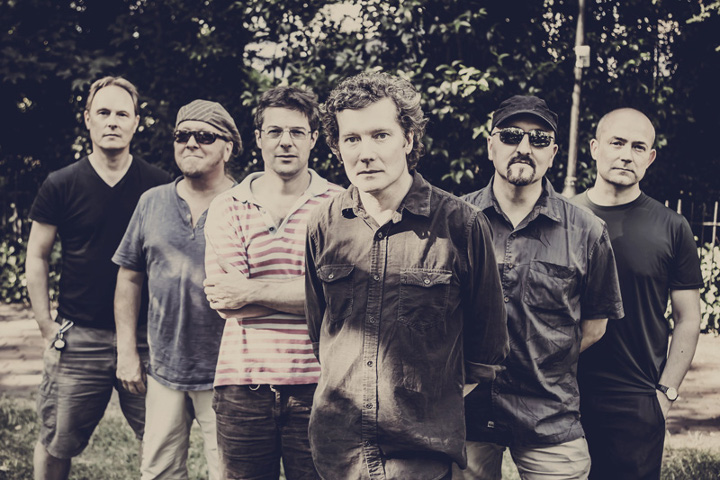

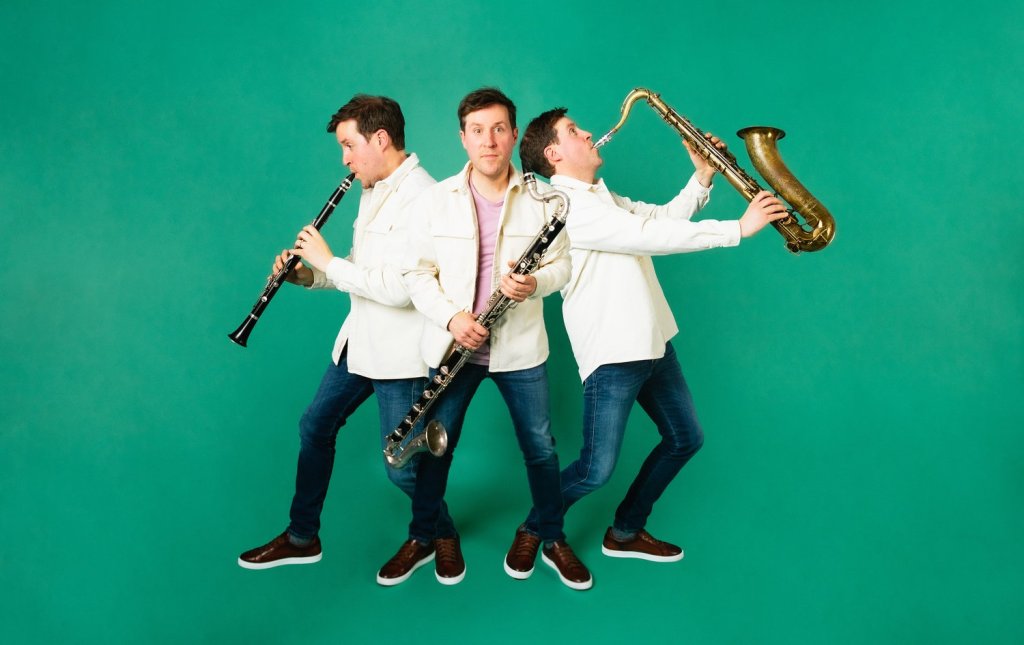

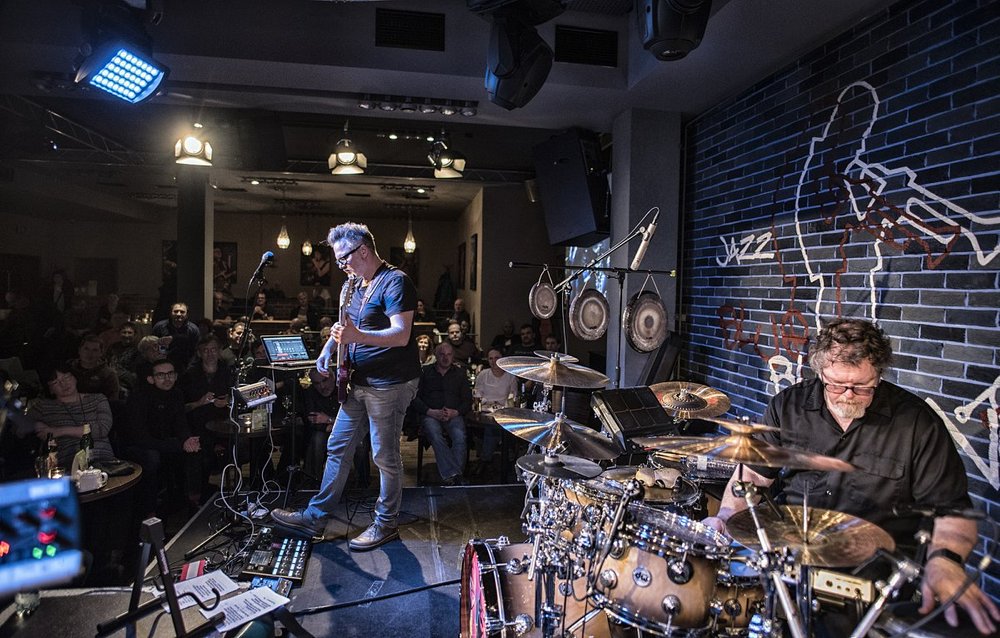
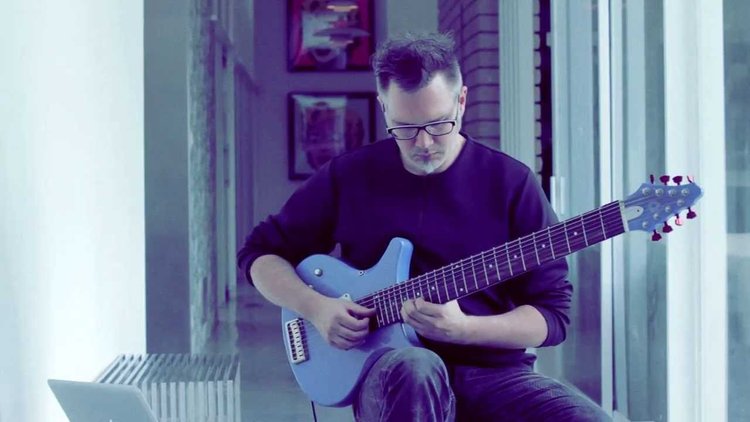
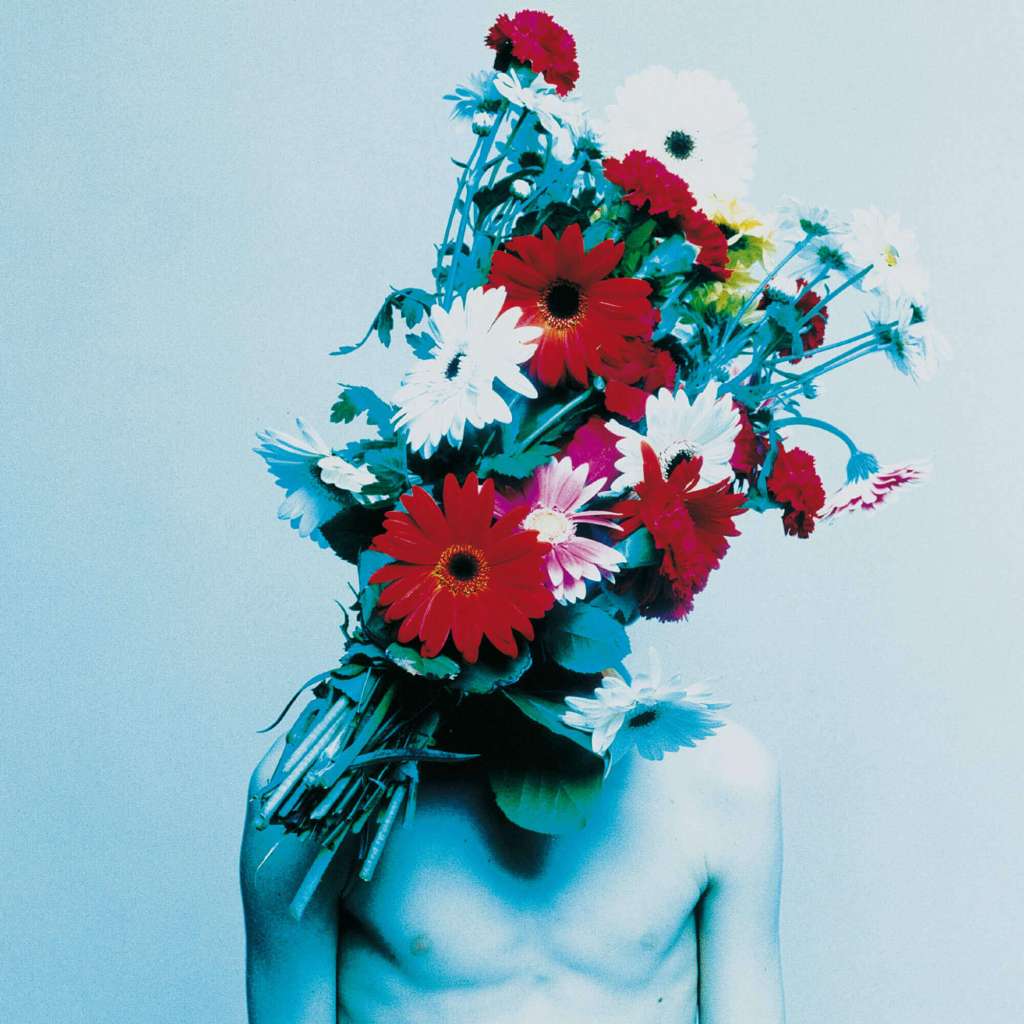

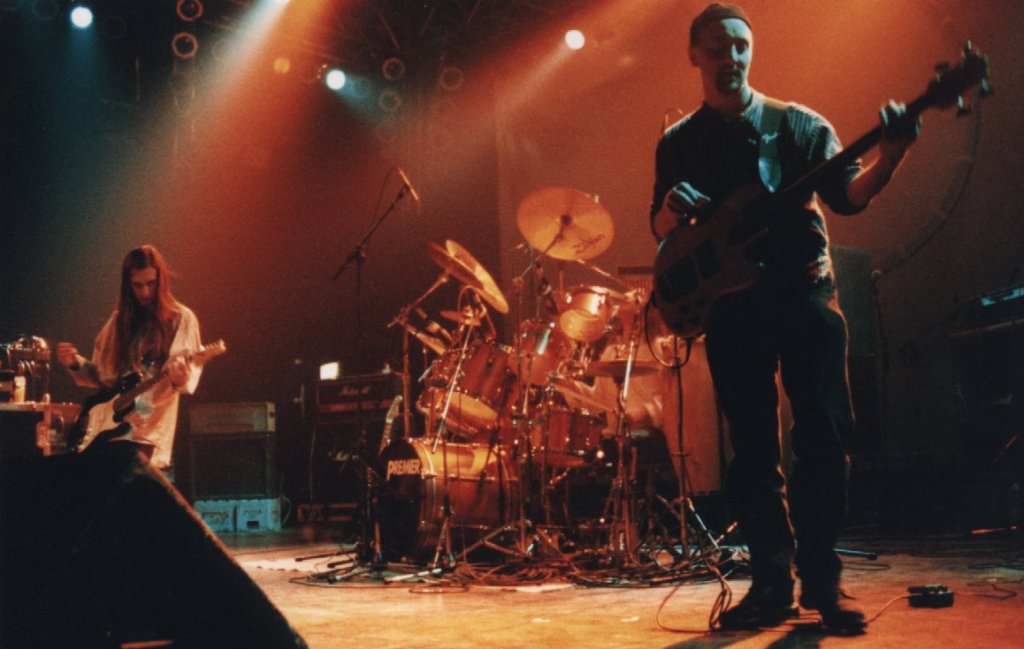
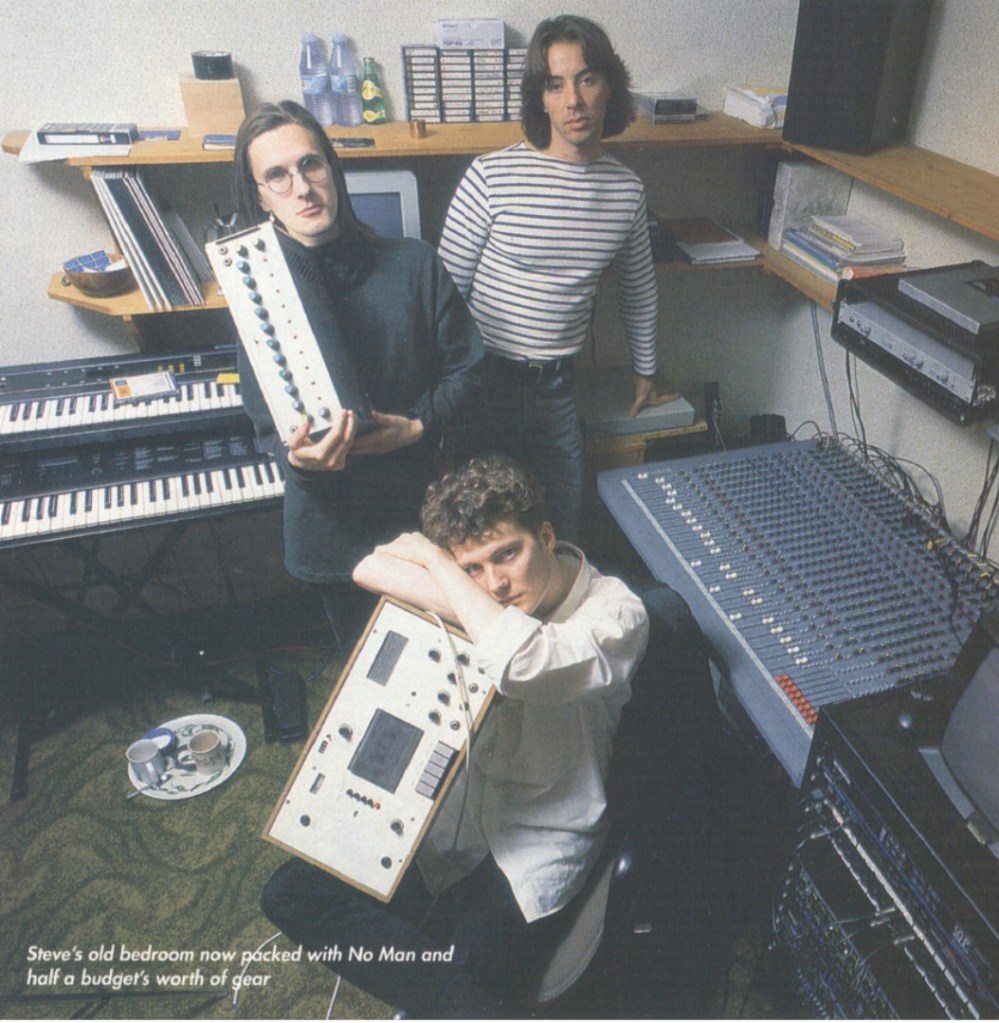
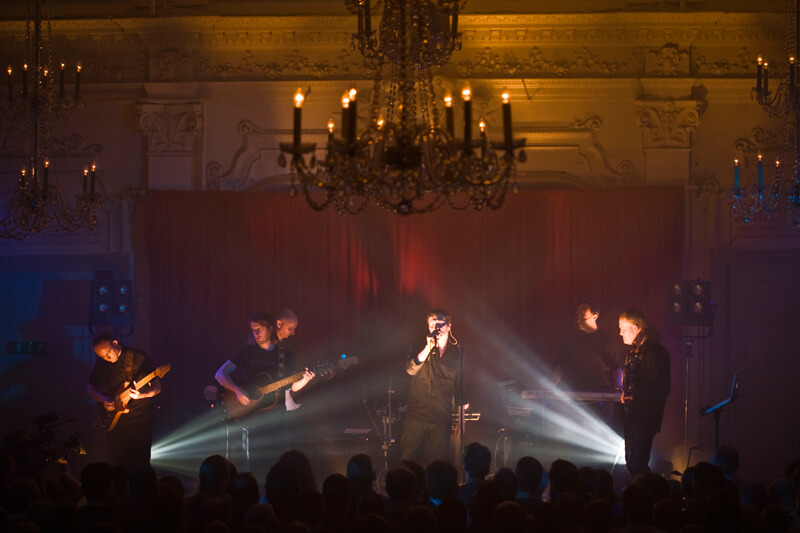
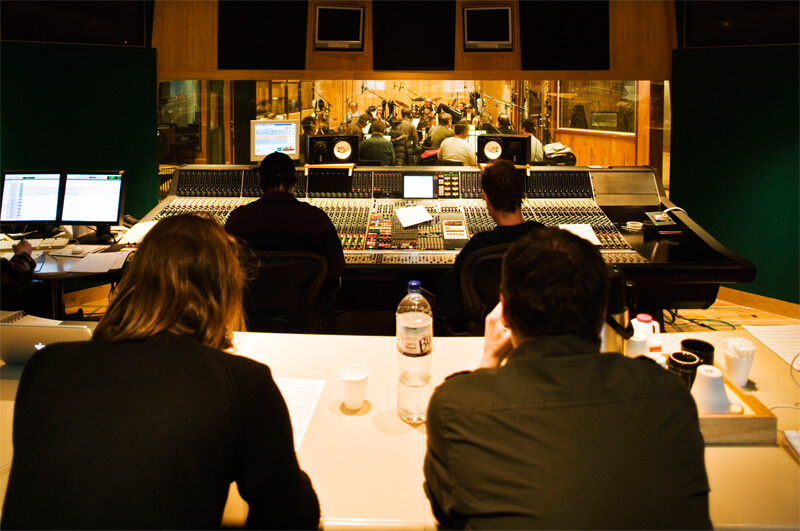


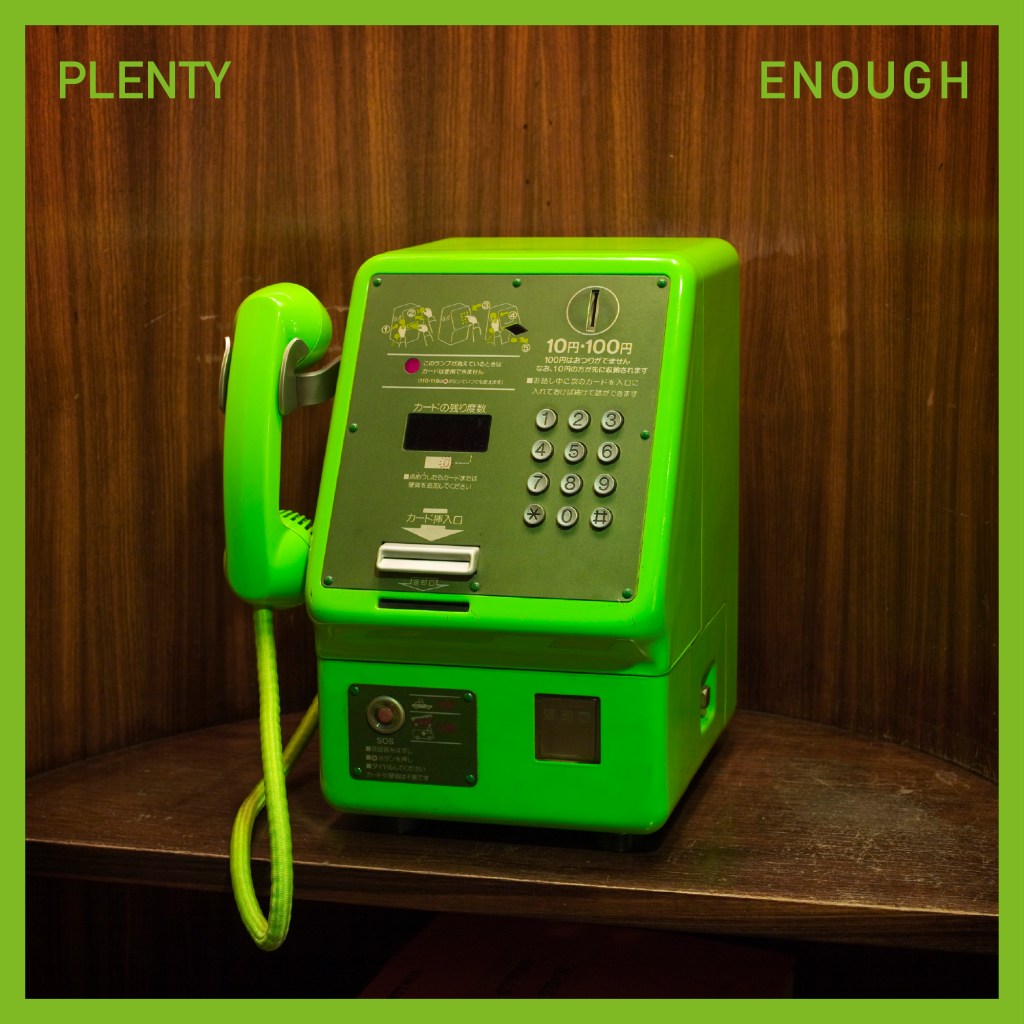
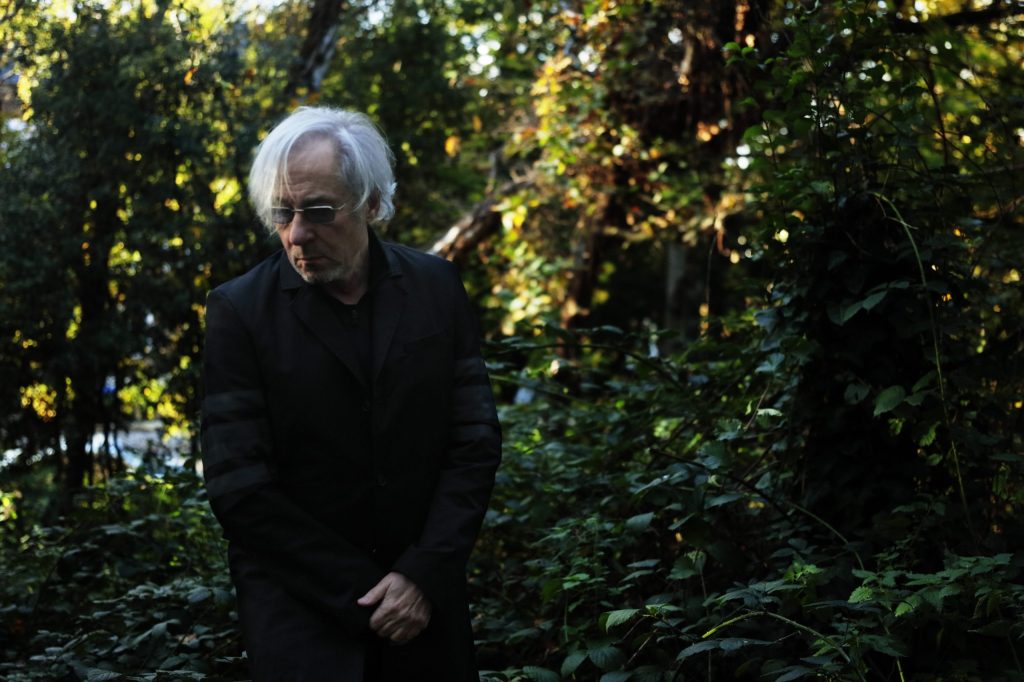
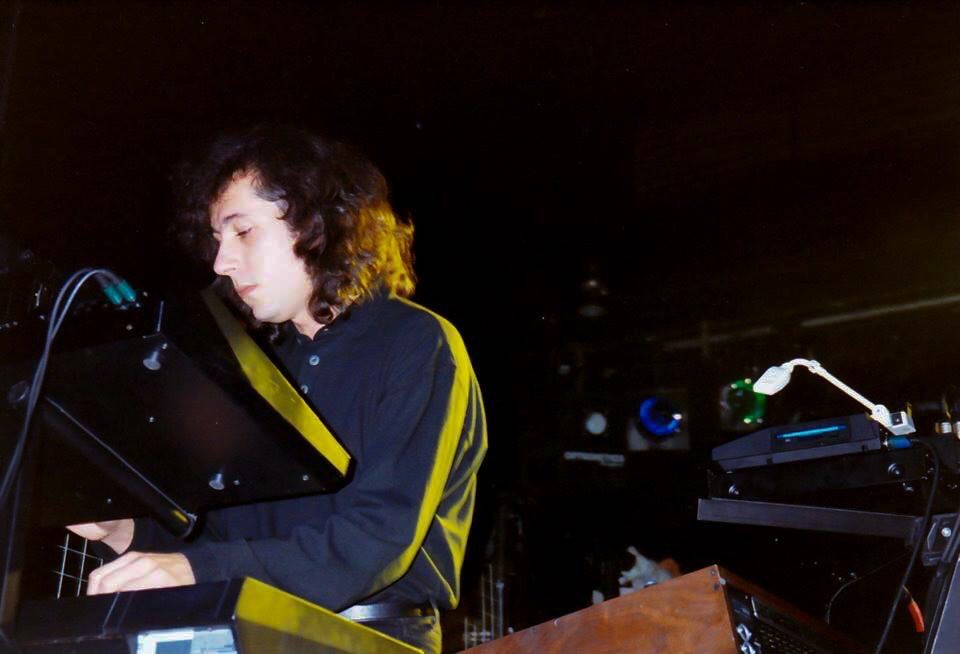
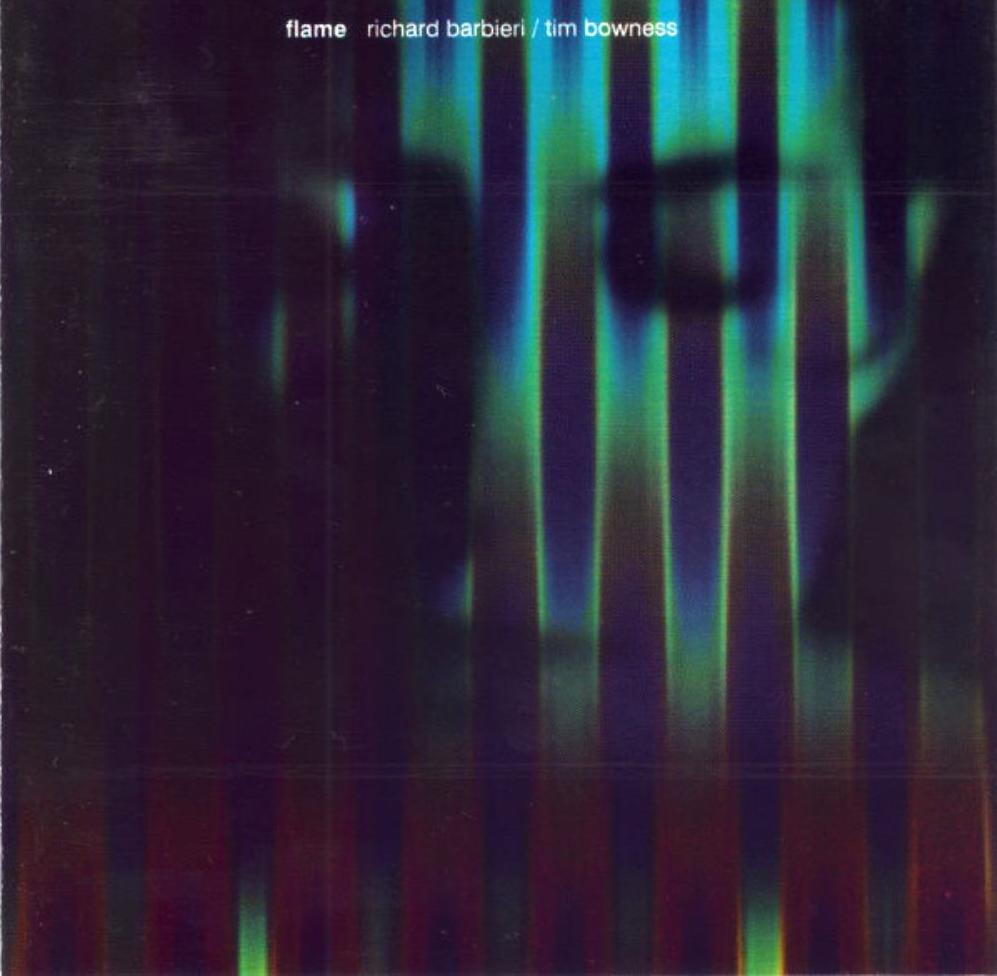



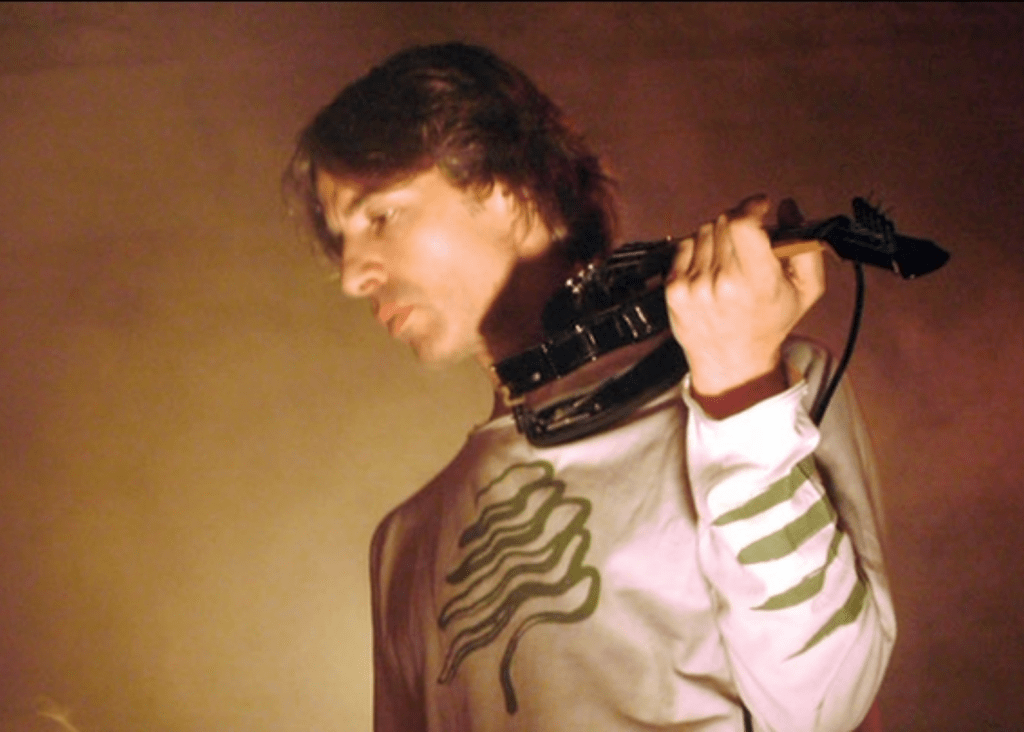
 All The Blue Changes