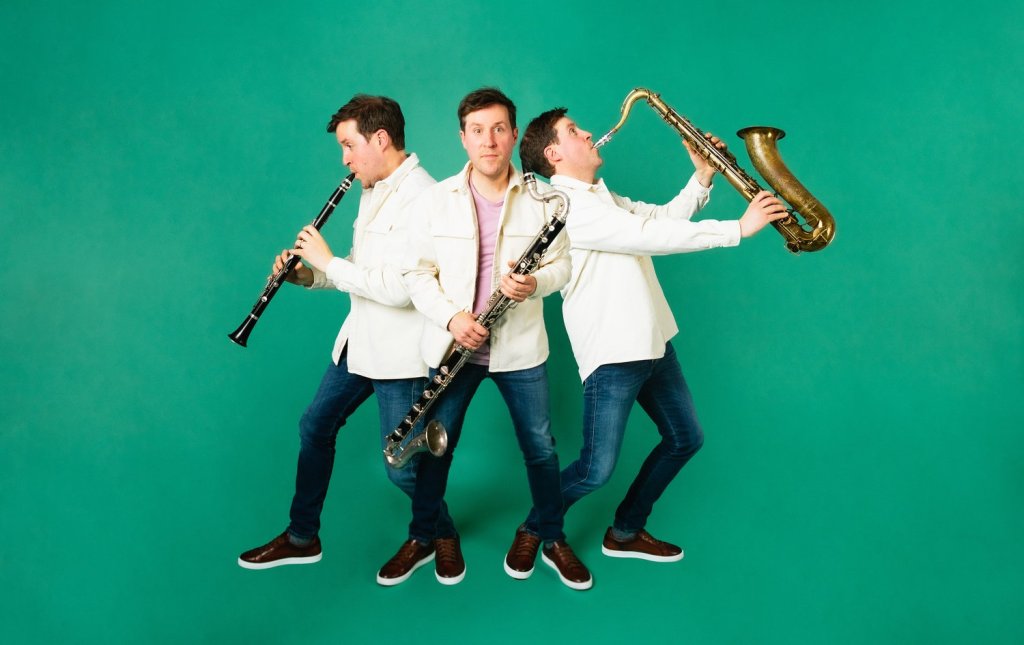
A well-renowned session player with credits including Radiohead, Blur, and Nick Cave, Ben Castle contributed his distinctive clarinet sounds to the sonic world of Together We’re Stranger.
How did you first hear about No-Man?
I heard of No-Man through Steven. I was a big fan of the projects I’d heard of his and was obsessed with Anja Garbarek’s Smiling & Waving album, that he produced. When I did a collaboration album with Marillion Drummer Ian Mosley in 2001, we were wondering who to get to mix it and, having known that Steven had worked with Marillion, I suggested him. I was very excited when he agreed to do it. After that, I got him to mix my 2004 solo album ‘Blah Street’. I remember Steven asking me if I’d play on ’Together We’re Stranger’, whilst he was working on one of those albums, and I recorded my parts in his studio.
What were the sessions like? Were they in person or through digital files?
I remember really enjoying the recording process. I mainly do online sessions for people these days, which is great, but nothing beats the collaboration of being in the same room with others. They had a good idea what they wanted me to play. They knew a lot of the melodies and parts they wanted me to play. We worked out some of the woodwind harmonies together and built up the parts as we went along. They also let me loose with some improvising, particularly on the bass clarinet on Photographs in Black and White.
Considering the rather ambient nature of the instrumentals, what was your approach to “filling the space”
I don’t usually think in terms of filling the space, although I have been known to fill all the spaces! I like to react to what’s going on around me, in an instinctive manner. This is why, the first or second takes are usually the best. When I was improvising, I really wanted to keep the feeling of space and not overplay.
Why use mainly clarinet for the album as opposed to other instruments? Was that your idea or Tim/Steven’s idea?
My friend Theo Travis has being playing with Steven and his various bands and projects for years. He’s a great saxophone and flute player, but luckily for me, I don’t think he plays clarinet, so I got the call to play clarinet and bass clarinet on this. The clarinet and bass clarinet aren’t used as much as saxophone in a pop/rock/prog context, so I think it was to go for the unexpected. I’m not sure who’s idea it was to use them.
Looking back after twenty years, are you surprised about the impact the album has had?
Not at all. I listened to it again recently, and it’s such a great album and timeless. It wasn’t jumping on any fads that would have dated it. It could have been recorded last week or forty years ago.
You worked on Steven’s solo record Grace for Drowning as well as the Storm Corrosion album. Would you say his approach to sessions had changed in the time in-between?
Steven is obviously constantly evolving and moving forward, so his approach to the music is bound to change as he goes along. He always knows what he wants and is very clear in explaining what that is, so from that point of view, things haven’t changed much for me. I have so many great memories of all the recordings I have done with him.
What was it like filming and performing with Radiohead for their 2011 Live from the Basement: The King of Limbs session?
It was a dream. I am a huge fan of theirs. I was playing with Kula Shaker on ’The Other Stage’ at Glastonbury in 1997 at the exact same time as Radiohead’s infamous set. I didn’t know much about Radiohead at that time, but there was such a buzz about them, I was compelled to check out OK Computer and it blew my mind and changed everything for me. Up until that point, I was very focused on playing straight ahead jazz. After immersing myself in their music, I wanted to throw rock and electronica into my musical melting pot. My ‘Blah Street’ album was born out of that. That’s why the jazz purists hated it. Haha! They were all so lovely on the filming day. It was quite surreal to be in the room playing music with them, as I was such a huge fan, but also felt very normal.
You did a few shows with Marillion in addition to contributing to one of their albums (plus Ian Mosley’s solo record). What was your experience with them?
The first vinyl album I ever bought was Misplaced Childhood, and the first gig I ever went to was Marillion at Milton Keynes Bowl in 1986 and I saw them many times before. Again, I was such a huge fan, that it was so surreal to get to actually play with them. I even recognised some of the fans in the audience from all the shows I’d been to. I remember playing with them at the Zodiac in Oxford and hardly being able to play the sax as I was smiling so much. I was thinking about the twelve year old me seeing myself up on stage with his heroes. I played with them last year at their convention and it was every bit the same buzz as it was the first time. I feel so lucky to have been able to play with so many of my heroes.

 All The Blue Changes